

Start by calling a meeting of all owners, then sign a written shared maintenance agreement that sets out responsibilities, cost shares, access rights and an escalation route before any work begins. That single step prevents the vast majority of disputes we see on shared properties across the UK, because it replaces informal assumptions with a document everyone has read and agreed to.
Here is the minimal checklist to get moving today:
- Convene all owners with at least seven days’ written notice, stating the purpose of the meeting.
- Appoint a coordinating lead (one named owner or a small committee) to hold documents and manage communications.
- Use a meeting minutes template to record attendance, decisions and any votes taken.
- Agree an interim cost share in writing, even if only provisional, so no owner can later claim they were unaware of their liability.
- Record contact details and insurance information for every owner at the first meeting.
- Grant emergency authority to the coordinating lead so urgent safety work can proceed without a full vote.
Every draft agreement must contain at minimum: a clear description of shared areas and responsibilities, the cost-apportionment formula, access rights for inspection and repair, a dispute-resolution route, and named emergency authority. Miss any one of these and you will likely revisit the gap under pressure.
Pro Tip: Keep one master copy of the signed agreement in a shared cloud folder (Google Drive or OneDrive) with version numbers on every revision. Physical copies get lost; unsigned drafts cause arguments about which version governs.
Key takeaways
A written shared maintenance agreement with a clear cost-apportionment formula, named emergency authority and staged contractor payments is the single most effective way to prevent disputes and protect every owner’s investment.
| Point | Details |
|---|---|
| Start with a signed agreement | Before any work begins, all owners should sign a written agreement covering responsibilities, cost shares, access and dispute resolution. |
| Use council toolkits and templates | Edinburgh Council and Scottish Borders Council publish free downloadable templates; adapt them to your jurisdiction and title conditions. |
| Scotland and England differ legally | Scotland uses the Tenement (Scotland) Act 2004; England and Wales relies on lease covenants, the Landlord and Tenant Act 1985 and the Party Wall etc. Act 1996. |
| Stage contractor payments | Tie payments to defined milestones, not calendar dates, to protect owners and maintain contractor accountability through to snagging. |
| Ajcandsonbuilders for shared works | Ajcandsonbuilders provides site assessments, itemised quotes and staged-payment contracts for shared and multi-owner repair projects across Liverpool and Merseyside. |
Table of Contents
- Which templates and toolkit files should you use straight away?
- What is the legal basis for shared maintenance in the UK?
- How do you organise a shared repair project step by step?
- How should you apportion costs and handle shortfalls?
- How do you select and manage contractors for shared works?
- What do you do when an owner refuses to agree or pay?
- How do you handle emergency repairs safely and recover costs?
- What clauses should your shared maintenance agreement contain?
- Why the paperwork matters more than the repair itself
- Ajcandsonbuilders can help you manage shared building works
- Sources
Which templates and toolkit files should you use straight away?
The most reliable starting point for a shared building maintenance agreement guide is a set of pre-built, editable templates rather than a blank document. Councils and third-sector organisations have done much of the drafting work for you.
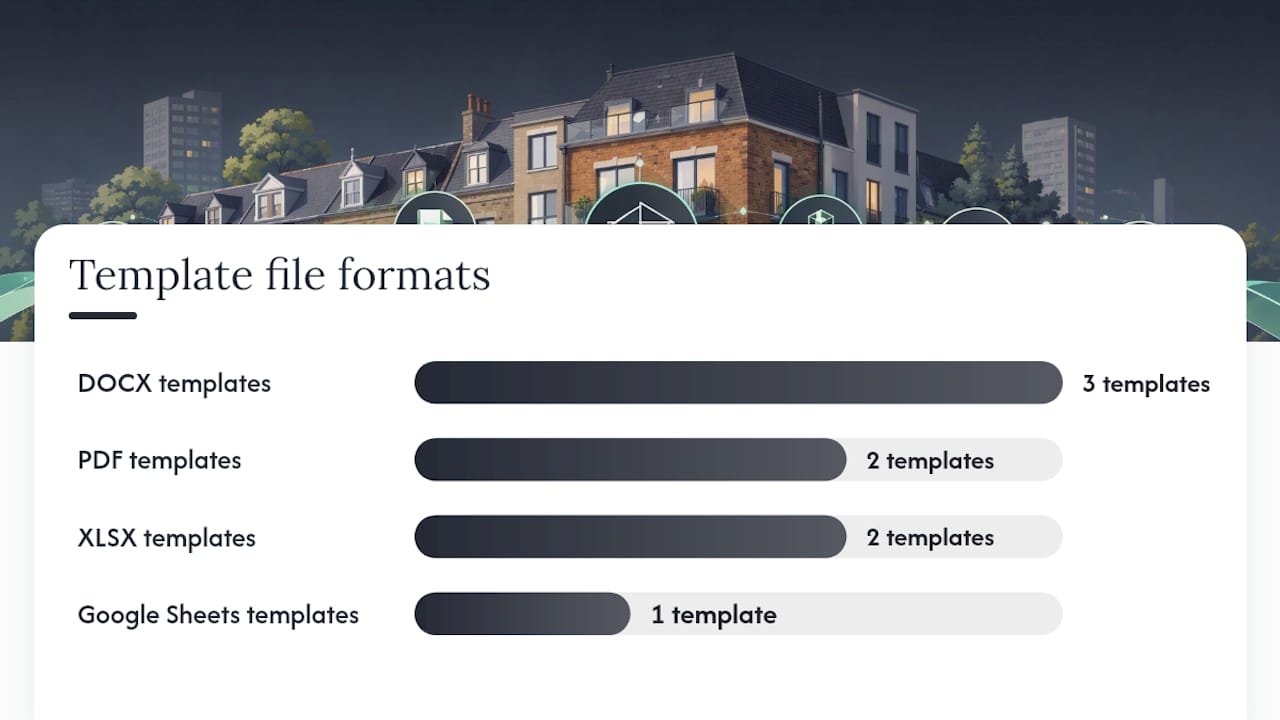
Edinburgh Council’s shared repairs toolkit provides downloadable PDF and DOCX files covering the full process, from initial owner notification through to final sign-off. The toolkit includes a meeting minutes template, a schedule of works, a cost-share record and a checklist for appointing contractors. Edinburgh’s Shared Repairs Service also offers direct practical support to owners who need help using the documents.
The five core files you need are:
- Shared maintenance agreement (DOCX): The master legal document. One owner holds the signed original; all others keep a countersigned copy. Version-control every amendment with a date and the initials of all signatories.
- Meeting minutes template (DOCX or PDF): Record attendance, agenda items, decisions reached and any dissenting votes. These minutes are your primary evidence if a dispute reaches tribunal.
- Schedule of works (DOCX or XLSX): Lists each repair item, the responsible party, the estimated cost and the target completion date. Update it after every contractor quote.
- Cost-share spreadsheet (XLSX or Google Sheets): Calculates each owner’s contribution automatically once you enter the apportionment formula and total cost. Keep a locked reference copy alongside the working version.
- Emergency authorisation form (PDF): A one-page document pre-signed by all owners, authorising the coordinating lead to instruct emergency works up to a defined financial threshold (typically £500–£1,500 depending on the property).
For England and Wales, Genie AI’s Joint Maintenance Agreement template provides a jurisdiction-specific starting point with clauses referencing the Law of Property Act, the Landlord and Tenant Act and the Party Wall etc. Act. Treat any template as a starting point, not a finished document. Local title conditions, lease covenants and the specific layout of your building will require amendments, so always have a solicitor review the final version before it is signed.
Note on file formats: Distribute PDFs for signing and record-keeping. Keep DOCX masters for editing. Use XLSX or Google Sheets for cost calculations so figures update automatically when costs change.
What is the legal basis for shared maintenance in the UK?
The legal framework for joint maintenance responsibilities differs significantly between Scotland and England and Wales, and getting the jurisdiction right shapes every clause in your agreement.
Scotland
In Scotland, the primary statute is the Tenement (Scotland) Act 2004, which sets out default rules for the maintenance and repair of tenement buildings where the title deeds are silent. Under the Act’s Tenement Management Scheme, most decisions about maintenance require a majority of owners (more than half by share), though certain decisions, including demolition or abandonment, require unanimity. Emergency repairs can be authorised by any owner acting alone, with costs recoverable from all owners afterwards.
Under One Roof provides structured guidance on informing owners, reaching decisions and following a staged process to complete common repairs, specifically tailored to Scottish tenement law. Scottish Borders Council’s guidance similarly explains how jointly responsible owners should get together, agree and arrange maintenance work, and is a practical companion to the statutory framework.
Council-run shared-repair programmes are more developed in Scotland than elsewhere in the UK. Edinburgh’s Shared Repairs Service, for example, can act as a neutral facilitator and holds a register of vetted contractors.
England and Wales
South of the border, there is no equivalent single statute for tenement-style buildings. Instead, joint maintenance responsibilities are governed by a combination of:
- Lease covenants (in leasehold properties, the lease will specify which parts are the landlord’s responsibility and which fall to leaseholders collectively).
- Service-charge mechanisms under the Landlord and Tenant Act 1985, which regulate how service charges are demanded, consulted upon and challenged.
- The Party Wall etc. Act 1996, relevant where works affect a shared wall or boundary structure.
- Building Regulations (England: Building Regulations 2010), which apply whenever structural or notifiable works are carried out.
- The Law of Property Act 1925, which underpins easements and rights of access relevant to shared areas.
For commercial property upkeep in England and Wales, the lease is almost always the governing document. Where no lease exists (freehold neighbours sharing a driveway or boundary wall, for instance), a formal deed of covenant or a written shared maintenance agreement is the only enforceable mechanism.
Decision thresholds in England and Wales depend entirely on what the lease or title deed says. Where documents are silent, unanimous agreement is the safest assumption for major works, though mediation or court action may be needed to compel a reluctant owner.
How do you organise a shared repair project step by step?
A well-run shared repair follows a clear sequence. Skipping steps, particularly the formal notice and decision-record stages, is the most common reason costs become unrecoverable later.
- Identify the defect and assess urgency. Photograph the defect, note the date and obtain a preliminary opinion on whether it is urgent (safety risk or risk of worsening damage) or routine. Refer to your exterior brickwork repairs portfolio guidance for common defect types.
- Issue written notice to all owners. State the nature of the defect, the proposed action and the date, time and location of the owners’ meeting. In Scotland, the Tenement Management Scheme requires reasonable notice; in England and Wales, check the lease for any specified period (commonly 14–21 days for non-emergency matters).
- Hold the owners’ meeting. Use a meeting minutes template to record who attended, what was discussed, what was decided and the vote count. Decisions should be recorded as formal resolutions.
- Appoint a coordinator or committee. One named person should hold the master agreement, manage contractor communications and hold any shared funds. Confirm this appointment in the minutes.
- Obtain at least three quotes. Issue a brief written scope of works to each contractor so quotes are comparable. For works above a moderate value, consider a short written tender document with a deadline and evaluation criteria.
- Agree the schedule of works and cost share. Update the schedule of works with the accepted quote. Confirm each owner’s financial contribution in writing before instructing the contractor.
- Appoint the contractor in writing. Issue a signed contract or letter of instruction that references the agreed scope, price, programme, payment schedule and defects liability period.
- Oversee works and keep records. Photograph progress at key stages. Record any variations in writing before they are carried out.
- Certify completion and release final payment. Walk the works with the contractor, note any defects, agree a snagging list and retain a proportion of the final payment until snagging is resolved.
- File all records. Store signed contracts, invoices, payment records, photographs and correspondence in the shared folder. These documents are your evidence if any dispute arises later.
Typical timescales: Allow several weeks from first notice to contractor appointment for routine works. Emergency works can compress this to a few days, but the documentation steps still apply retrospectively.
Pro Tip: When requesting quotes, provide each contractor with identical written information: a brief description of the defect, the access arrangements, the target start date and any restrictions (e.g. working hours in a residential block). Inconsistent briefs produce incomparable quotes and delay the decision.
For recurring common-area services such as cleaning or debris removal, a separate operational agreement can sit alongside the maintenance agreement. Common area service agreements explain how to structure these for property owners.
How should you apportion costs and handle shortfalls?
Cost allocation is where most shared maintenance agreements break down. CCI-National’s guidance on shared facilities agreements identifies unclear cost allocation and governance as the leading causes of disputes, recommending itemised schedules, defined committee representation and transparent apportionment methods.
Common apportionment methods
- Equal split: Every owner pays the same amount regardless of unit size or benefit. Simple to administer, but can feel unfair in buildings with very different unit sizes.
- Floor-area proportion: Each owner’s share reflects their unit’s floor area as a percentage of the total. More equitable for mixed-size buildings, but requires accurate floor-area data.
- Unit/share-based: Common in Scottish tenements and some leasehold blocks, where the title deed assigns a fixed share fraction to each unit. The most legally defensible method where shares are already defined.
- Benefit-based: Owners contribute in proportion to the benefit they receive from the repair (e.g. only ground-floor owners contribute to a ground-floor drainage repair). Logical but harder to agree and document.
Whichever method you choose, record it explicitly in the agreement and in the cost-share spreadsheet. Changing the formula mid-project without unanimous written consent is a common source of later disputes.
Collecting contributions and handling shortfalls
Set a payment deadline in the agreement, typically 14–28 days after the contractor’s invoice is received. Where a sinking fund or reserve account exists, draw from it first and replenish it from owner contributions over an agreed period.
If an owner cannot or will not pay, the options are:
- Escrow or retention: Require all owners to deposit their estimated share into a joint account before the contractor is instructed. This is the cleanest protection against shortfalls.
- Service-charge mechanism (England and Wales): Where a lease provides for service charges, the landlord or management company can demand contributions and pursue arrears through the First-tier Tribunal (Property Chamber).
- Legal recovery (Scotland): Under the Tenement (Scotland) Act, an owner who carries out necessary repairs can recover costs from other owners through the sheriff court if they refuse to pay.
- Debt recovery (England and Wales, freehold): Where no lease mechanism exists, recovery is through the county court. This is slower and more costly, so prevention through escrow is strongly preferable.
Pro Tip: For any project above £2,000 per owner, ask all parties to pay their share into a dedicated joint account before work starts. It takes one extra step at the outset and eliminates the most common cause of mid-project disputes.
For recurring maintenance tasks such as common area debris removal, a standing payment schedule in the agreement avoids the need to re-agree contributions each time.
Grant and council support
In Scotland, local authority shared-repair schemes may offer grant funding or interest-free loans for qualifying works, particularly in conservation areas or for energy-efficiency improvements. Contact your local council’s housing or building standards team. In England and Wales, Homes England and local authority housing improvement programmes occasionally fund shared repairs in designated areas. Check with your local authority before assuming no support is available.
How do you select and manage contractors for shared works?
Selecting the right contractor is the single decision that most directly affects whether a shared repair project delivers value. A poor appointment costs far more to correct than it saves upfront.
Procurement checks
Before appointing any contractor, verify:
- Public liability insurance of at least £2 million (£5 million for larger or commercial works).
- Employers’ liability insurance if the contractor employs staff on site.
- Relevant trade registration (Gas Safe, NICEIC, CHAS, Constructionline or equivalent) where the work type requires it.
- Two recent references from comparable shared or multi-owner projects, with contact details you actually call.
- A written health and safety policy for contractors with five or more employees (legally required under the Health and Safety at Work etc. Act 1974).
- Evidence of recent similar work, ideally with photographs.
For guidance on selecting a builder as a property manager, the vetting steps are consistent whether the client is a single owner or a group.
For larger or recurring maintenance contracts, assembling an asset data pack (floor plans, previous repair records, known defects) and clear performance criteria before going to tender significantly improves quote quality and post-contract performance. This mirrors public-sector procurement practice, as illustrated by Find a Tender’s FM procurement guidance, which sets out staged tender processes, quality/price scoring and the importance of clear scope documents.
Key contract clauses
Every contractor appointment for shared works should include, in writing:
- Scope of works: A precise description of what is and is not included.
- Price mechanism: Fixed price, schedule of rates or cost-plus, with any provisional sums clearly identified.
- Programme: Start date, completion date and key milestones.
- Variations procedure: Written instruction required before any variation is carried out; no verbal changes.
- Insurance obligations: Contractor to maintain named insurances throughout the works.
- Defects liability period: Typically 12 months from practical completion.
- Payment schedule: Stage payments tied to defined milestones, not calendar dates.
- Termination rights: Grounds and notice period for either party to end the contract.
Pro Tip: *Stage payments tied to milestones protect all owners.
Red flags to watch for
- Requests for more than 50% payment upfront before any work begins.
- Reluctance to provide written insurance certificates.
- No fixed price or programme offered, only verbal assurances.
- Pressure to start immediately without a signed contract.
- No VAT registration number on quotes above the VAT threshold (currently £90,000 annual turnover).
What do you do when an owner refuses to agree or pay?
Disputes in shared maintenance are almost always about money or decision-making authority. The escalation path below applies to both.
Initial steps
Start with a written notice to the non-cooperating owner, setting out the decision reached, the amount owed and a deadline of at least 14 days. Keep a copy. If the owner does not respond, send a second notice by recorded post. Document every communication.
If direct negotiation fails, consider appointing a neutral mediator. The Civil Mediation Council maintains a register of accredited mediators in England and Wales. In Scotland, the Scottish Mediation Network offers similar services. Mediation is faster and cheaper than court action and preserves working relationships where owners must continue to share a building.
When to escalate
Tribunal action in England and Wales is appropriate where a service-charge mechanism exists and the landlord or management company is pursuing arrears. The First-tier Tribunal (Property Chamber) can determine the reasonableness of charges and order payment. In Scotland, the sheriff court handles recovery under the Tenement (Scotland) Act.
Evidence to gather
The strength of your case depends almost entirely on documentation:
- Signed meeting minutes recording the decision and the vote.
- Written notices sent to the non-paying owner, with proof of delivery.
- Contractor quotes, the accepted contract and invoices.
- Payment records showing what has and has not been paid.
- Photographs of the defect before, during and after works.
- The signed shared maintenance agreement itself.
How do you handle emergency repairs safely and recover costs?
An emergency is any defect that poses an immediate risk to safety, structural integrity or the habitability of the building: a collapsed roof section, a burst shared pipe causing flooding, or a dangerous external wall. Speed matters, but so does documentation.

Who can authorise emergency works?
In Scotland, the Tenement (Scotland) Act permits any owner to instruct necessary emergency repairs and recover costs from all owners afterwards. In England and Wales, the right to act unilaterally depends on the lease or the pre-signed emergency authorisation form in your agreement. This is why the emergency authorisation form, signed by all owners at the outset, is so important.
Emergency works checklist
- Confirm the emergency. Photograph the defect immediately and note the date and time.
- Notify all owners. Send a brief message (text or email is sufficient) stating the nature of the emergency and the intended action.
- Instruct the contractor. Use a contractor already on your approved list where possible. If not, obtain at least two verbal quotes and confirm the instruction in writing (email is acceptable in an emergency).
- Implement immediate safety measures. Hoarding, barriers, temporary propping or isolation of services as required.
- Carry out temporary repairs. Stabilise the defect to prevent worsening. Permanent repairs follow once all owners have been formally consulted.
- Document everything. Photograph all stages of the emergency works. Retain all invoices and correspondence.
- Hold a follow-up meeting. Within seven days of the emergency, convene owners to agree the permanent repair programme and cost share.
- Issue cost-recovery notices. Send each owner a written statement of the emergency costs incurred and their share, with a payment deadline.
Keep a brief emergency works record form in your shared folder. It should capture: the date and nature of the emergency, who authorised the works, the contractor instructed, the cost, and the evidence retained.
What clauses should your shared maintenance agreement contain?
A well-drafted shared maintenance agreement does not need to be lengthy, but it does need to be precise. The clauses below cover the areas most likely to cause problems if left vague. Adapt the wording to your specific property and jurisdiction.
Core clause bank
- Definitions clause: Define “shared areas” (listing each element by reference to a plan), “owners” (by name and unit), “coordinating lead” and “emergency works”. Ambiguity about what is shared is the most common drafting failure.
- Scope of shared maintenance obligations: State which elements each owner is responsible for maintaining, which are shared, and the standard of maintenance required (e.g. “kept in good and substantial repair and condition”).
- Apportionment formula: State the method (equal, floor-area, share-based or benefit-based), the percentage or fraction attributable to each owner, and the mechanism for recalculating if ownership changes.
- Invoicing and payment: Specify the payment trigger (receipt of contractor invoice), the deadline (e.g. 14 days), the account into which payment is made and the interest rate applicable to late payments (e.g. 4% above the Bank of England base rate per annum).
- Notice procedures: State how formal notices must be given (written, to the address registered in the agreement), the minimum notice period for meetings and the method of service (post, email or hand delivery).
- Access rights: Grant each owner and their contractors reasonable access to shared areas and, where necessary, individual units, on reasonable notice (typically 48 hours except in emergencies).
- Insurance and indemnity: Require each owner to maintain buildings insurance for their unit and to provide evidence on request. Specify who holds the shared-areas policy where one exists.
- Default and recovery: State the consequences of non-payment (interest, legal recovery, registration of a charge against the title where permitted) and the process for recovering costs from a defaulting owner.
- Dispute resolution: Require mediation before litigation. Name the appointing body (e.g. the Civil Mediation Council or Scottish Mediation Network) and set a time limit for the mediation process.
- Emergency powers: Name the coordinating lead, the financial threshold for unilateral emergency action and the retrospective notification and cost-recovery process.
- Amendment and termination: Require unanimous written consent to amend the agreement. State what happens to shared funds on termination.
Template outline
A complete agreement typically runs to eight to twelve clauses in this order: Parties and Recitals, Definitions, Shared Areas (with plan attached), Maintenance Obligations, Cost Apportionment, Payment and Default, Access, Insurance, Dispute Resolution, Emergency Powers, Amendment, and Execution (signatures).
Genie AI’s shared maintenance agreement template provides a jurisdiction-adaptable starting structure, though you should treat it as a drafting aid rather than a finished document. Clauses on cost allocation and governance deserve particular attention: as CCI-National notes, these are the areas most likely to generate disputes when left imprecise.
Clauses that most often cause trouble: The apportionment formula (especially when floor areas are disputed), the definition of “shared areas” (particularly where a plan is not attached), and the notice period for meetings (too short and decisions are challenged; too long and urgent repairs are delayed).
Why the paperwork matters more than the repair itself
Most owners focus on the physical work: the scaffolding, the pointing, the new roof felt. The agreement feels like an administrative burden. Having worked on shared-property projects across Merseyside and beyond, the pattern is consistent: the projects that run smoothly are not necessarily the ones with the simplest defects or the cheapest contractors. They are the ones where someone took the time to get the governance right before the first spade went in.
Three things distinguish well-run shared repair projects from the ones that end in solicitors’ letters.
First, there is always one master document. Not a folder of emails, not a WhatsApp thread, not a verbal understanding from a meeting three years ago. One signed agreement, one version-controlled schedule of works, one cost-share spreadsheet. The discipline of keeping a single source of truth removes the ambiguity that disputes feed on.
Second, payments are staged against milestones, not against the calendar. Contractors who are paid in full before the work is finished have less incentive to return for snagging. Owners who have not yet paid their share have more leverage to ensure quality. Staging payments is not about distrust; it is about aligning everyone’s interests at the right moment.
Third, the coordinating lead is genuinely neutral. When one owner takes on the role and also has the largest unit or the most to gain from a particular repair, the others become suspicious of every decision. Appointing someone with no stronger interest than any other owner, or using a managing agent or solicitor as a neutral third party, removes that friction before it starts.
The legal framework, whether the Tenement (Scotland) Act or an English lease covenant, gives you the skeleton. The agreement and the governance give it muscle. Both are needed.
Ajcandsonbuilders can help you manage shared building works
When you have the agreement in place and the owners aligned, the next challenge is finding a contractor who understands the particular demands of shared-property work: clear communication with multiple decision-makers, transparent pricing, staged invoicing and the patience to work within a managed approval process.

Ajcandsonbuilders is a Liverpool and Merseyside-based building firm with direct experience of shared and multi-owner repair projects, including structural brickwork, rendering, external envelope repairs and full renovation works. We offer site assessments, written scopes of works, itemised quotes and project management through to final sign-off, with staged payment schedules built into every contract. Our building services in Liverpool and Merseyside cover the full range of works that shared-property owners typically need, and we are happy to provide references from comparable projects.
To arrange a site visit and written quote, contact us directly at Ajcandsonbuilders. We will confirm availability, visit the site with all relevant owners present if required, and provide a fully itemised written quote within five working days.
Sources
The sources below are the primary references used to compile this guide. Each provides free, authoritative material you can download and adapt.
- Shared repairs and maintenance
- Inform owners and reach decisions | Under One Roof
- Organising repairs and maintenance
- What is a Joint Maintenance Agreement? (Genie AI template — en-gb)
- Shared Facilities Agreements – CCI-National
Before relying on any single template, check your title deeds and lease (if applicable) to confirm which rules govern your specific property. Templates drafted for Scottish tenements will not map directly onto an English leasehold block, and vice versa. Where the title is silent or ambiguous, a short consultation with a property solicitor is a worthwhile investment before the agreement is signed.
This article is general information, not a substitute for advice from a qualified lawyer. Consult a qualified legal professional about your own circumstances before acting on anything here.