

The most reliably profitable renovation projects in the UK are those that add usable floor space or fix a genuine shortcoming in the property. A loft conversion or extension that creates a double bedroom and bathroom can add up to 24% to the value of a three-bedroom, one-bathroom house. A mid-range kitchen renovation combined with a knock-through to create a kitchen-diner returns up to 2× on investment for homes priced between £300,000 and £500,000. Adding a second bathroom where only one exists adds around 6% to the average home’s value. These are not aspirational figures. They reflect what UK buyers actually pay for, and they form the backbone of every sound renovation investment strategy.
Here is a quick summary of the projects with the strongest track records:
- Loft conversion with bedroom and bathroom: up to 24% value uplift
- Kitchen renovation with knock-through to kitchen-diner: up to 2× ROI on £300k–£500k homes
- Garage conversion: up to 20% value uplift, with low cost per square metre
- Adding a second bathroom or en-suite: around 6% value uplift
- Single-storey rear extension: 5–10% value uplift
- Energy efficiency upgrades to EPC band C or above: 0.5%–3.7% premium depending on region and study
- Interior cosmetic refresh (painting, flooring, garden tidy): 2–5% uplift for relatively modest outlay
- Kerb appeal improvements: influences 68% of buyers and supports faster sales
Detailed examples of profitable renovation projects: costs, returns, and regional data
Understanding which renovation pays off requires more than a headline percentage. Costs vary meaningfully across UK regions, and the return on any given project depends heavily on the local price ceiling and property type.
Loft conversions and garage conversions
A loft conversion sits at the top of the ROI table for most UK homeowners because the structure already exists. You are converting unused attic space rather than building from scratch, which keeps cost per square metre of living space gained lower than almost any other route. A mid-range loft conversion can cost varying amounts depending on specification and region, and the value uplift for a three-bedroom home gaining a fourth bedroom with en-suite is well established in Nationwide’s research.
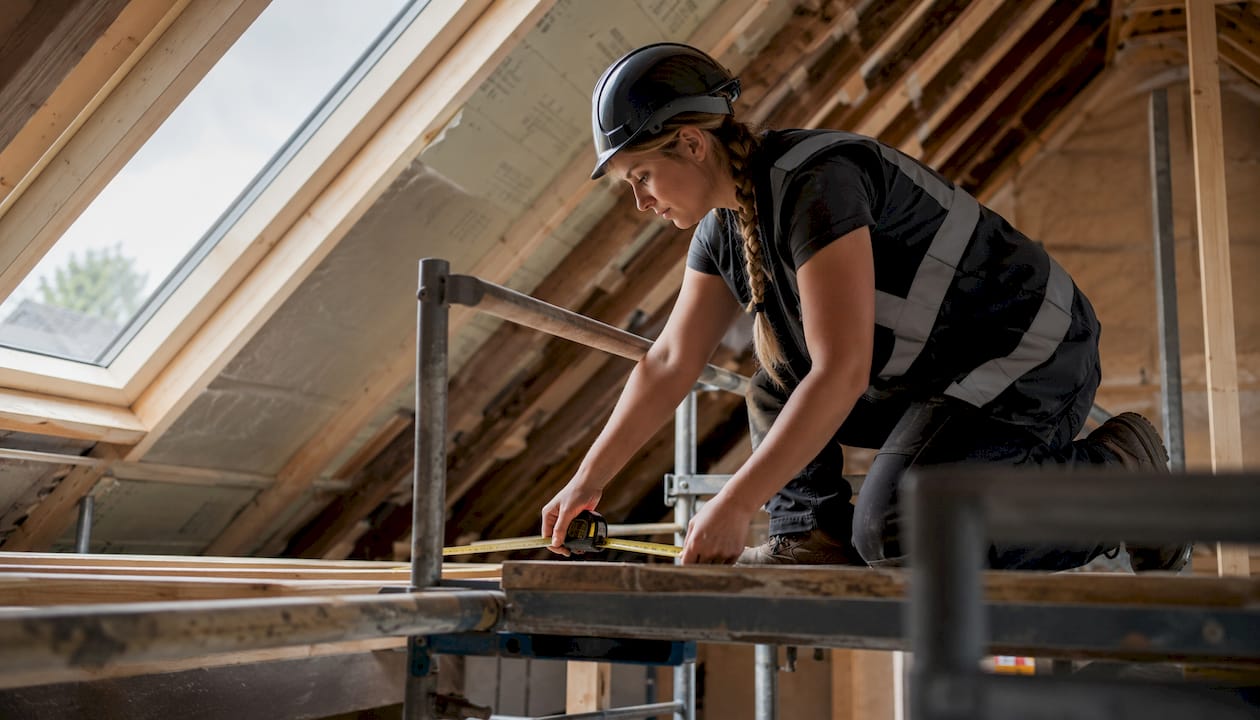
Garage conversions offer an even lower entry point. A mid-range garage conversion typically costs amounts that vary regionally, and the value added can reach up to 20–24% in areas where off-street parking is not scarce, especially when the conversion adds a bedroom or bathroom. In urban parts of Merseyside, where terraced housing stock is dense and buyers prioritise living space over parking, a garage conversion to a home office or additional bedroom is one of the most cost-effective moves available.
| Renovation type | Typical mid-range cost | Typical value uplift |
|---|---|---|
| Loft conversion (bedroom + bathroom) | £40,000 | Up to 24% |
| Garage conversion | £12,000 | Up to 20% |
| Single-storey rear extension | £50,000 | 5–10% |
| Kitchen renovation (mid-range, with knock-through) | £28,500–£36,000 | Up to 2× ROI |
| Adding a second bathroom | £4,000–£8,000 | Around 6% |
| Energy efficiency to EPC band C | £5,000–£30,000 | 0.5%–3.7% premium |
Pro Tip: Retaining existing plumbing and electrical positions during a kitchen or bathroom renovation saves an average of £2,000 per project. It is one of the simplest ways to protect your margin without compromising the finished result.
Kitchen renovations and the knock-through advantage
The single biggest value lever in a kitchen project is not the cabinetry or worktops. It is the knock-through. Combining the kitchen with an adjacent dining room to create an open-plan kitchen-diner typically costs £4,000–£12,000 for the structural work alone, yet delivers £15,000–£30,000 of resale uplift in the £300,000–£500,000 property bracket. Kitchen-diners are the single most-cited feature in 2026 UK buyer feedback.

A real 2026 case illustrates this clearly. A 1930s three-bedroom semi in Selly Oak, Birmingham, valued at £375,000, had its 18m² kitchen knocked through to combine with a small dining room, creating a 26m² kitchen-diner. Mid-range Magnet shaker units, quartz worktops, and NEFF integrated appliances were fitted, with the sink and hob positions kept in place to avoid moving services. The total project cost was £24,820. The resurvey 12 months later showed a £42,000 valuation uplift, a 1.69× ROI multiple. Specifying premium bespoke finishes on the same project would have cost £45,000–£55,000 and produced roughly the same uplift, collapsing the ROI below 1.0×.
Regional cost and ROI variations
Build costs differ substantially across the UK, and those differences directly affect your ROI multiple. In London and the South East, mid-range kitchen costs are generally higher than the UK average. In the North West, including Liverpool and Manchester, the same specification generally costs somewhat less than average, while the resale uplift in pounds remains competitive. The result is that North West projects consistently deliver ROI multiples of 1.5×–1.8× on mid-range kitchen renovations, among the strongest in the country.
- North West (incl. Liverpool, Manchester): mid-range kitchen cost £21,500–£27,000; resale uplift £28,000–£48,000; ROI multiple 1.5×–1.8×
- West Midlands: £22,000–£27,500 cost; £28,000–£50,000 uplift; 1.4×–1.8× ROI
- Yorkshire: £21,000–£26,500 cost; £25,000–£42,000 uplift; 1.3×–1.6× ROI
- London: £28,500–£36,000 cost; £30,000–£50,000 uplift; 1.0×–1.4× ROI
For homeowners and investors in Merseyside, this regional picture is genuinely encouraging. Lower build costs combined with solid buyer demand for family-sized, open-plan homes mean that well-executed house renovation projects in this area can outperform the national average on ROI multiples, even when the absolute pound uplift is smaller than in the South East.
Adding a bathroom
Properties with three or more bedrooms and only one bathroom carry a measurable market penalty. Buyers factor in the cost and disruption of adding a bathroom themselves, and that calculation shows up in their offers. Adding a second bathroom or en-suite removes that discount entirely, leading to a consistent value uplift on average homes, and the cost of fitting a bathroom in existing space starts at around £4,000–£8,000 at mid-range specification.
Renovation pitfalls: projects that rarely pay off
Not every renovation adds value. Some actively destroy it, particularly when the specification is mismatched to the property’s price bracket or the local market ceiling.
The over-personalisation trap
Over-personalising renovations with high-specification bespoke finishes in average homes is one of the most common and costly mistakes UK homeowners make. A handmade kitchen costing £75,000–£140,000 will not return its full cost outside properties valued at £1.5 million or more. In a mid-market three-bedroom semi, the same spend produces a fraction of the uplift that a £25,000 mid-range kitchen would generate. The buyer at that price point does not expect, and will not pay for, bespoke cabinetry.
Local price ceilings
Every street has a price ceiling: the maximum that buyers will realistically pay for a home on that road, regardless of how much has been spent improving it. Investing beyond that ceiling is the most reliable way to lose money on a renovation. If three-bedroom homes on your road sell at a clear top price, a costly extension that pushes your asking price well above that figure will not recover the full spend, because buyers compare your home directly against its neighbours.
Projects to approach with caution
- Budget-tier kitchen refits (£8,000–£18,000): these often return only 0.6×–1.0× of cost because buyers at this level still see the kitchen as needing upgrading.
- Premium or designer kitchens in mid-market homes: a £35,000–£75,000 kitchen only pays back on properties valued at £750,000 or more.
- Basic conservatories: estate agents increasingly report that standard conservatories add little measurable value and can deter buyers who view them as a maintenance liability. An insulated, solid-roofed garden room performs considerably better.
- Swimming pools: these carry negative ROI in virtually all UK markets, adding maintenance liability without a corresponding price premium.
- High-spec renovations in developer-active postcodes: in areas with strong investor and buy-to-let demand, developers price in the renovation themselves, so completing the work yourself often does not return the full cost.
- Luxury finishes in rental properties: the rental yield uplift rarely justifies the capital outlay on premium materials.
The principle that runs through all of these is straightforward. Renovation success in the UK comes from fixing what the property lacks, not from transforming it into something the local market will not support.
How to plan and budget a renovation that actually pays off
Sound planning is what separates a renovation that returns 1.5× from one that breaks even. The financial outcome is largely decided before a single wall comes down.
A practical planning checklist
- Get a current valuation from a local agent who knows your specific road, not just the postcode. This is the only reliable way to understand your local price ceiling before you commit to a budget.
- Identify what the property lacks rather than what you would like it to have. A three-bedroom house with one bathroom needs a second bathroom before it needs a new kitchen. Fixing a genuine shortcoming delivers the strongest returns.
- Set your budget against the ceiling, not your ambition. If the top price on your street is £350,000 and your home is currently worth £290,000, you have a renovation headroom of roughly £60,000 before you risk over-improving.
- Retain existing plumbing and electrical positions wherever the layout allows. Moving services adds cost without adding value.
- Understand renovation project stages before work begins. Projects that run over budget almost always do so because the scope was not fixed clearly at the outset.
- Match specification to property bracket. Mid-range fittings on a mid-market home consistently outperform premium fittings on the same property in ROI terms.
- Consider timing. The MyBuilder Renovation Nation Report 2026 found that 27% of homeowners plan to increase renovation spending in 2026, with kitchen and bathroom projects leading demand. Booking trades early in the year avoids the summer backlog.
Timing and economic context
Economic conditions shape renovation returns in ways that are easy to overlook. When buyer demand is strong and stock is low, even modest improvements attract competitive offers. When the market softens, only genuinely improved properties hold their price. Practical and energy-efficient upgrades have gained ground over luxury features as households remain focused on running costs. Bringing a property to EPC band C or above adds a premium of 0.5%–3.7% depending on the region and the study, and lower energy bills are an increasingly persuasive selling point in their own right.
Pro Tip: When budgeting for electrical work during renovation, factor in a full condition survey before finalising your scope. Discovering mid-project that a rewire is needed adds cost and delay that a pre-start survey would have priced in from the beginning.
What Ajcandsonbuilders has learned from renovation projects across Merseyside
Ajcandsonbuilders has delivered renovation and conversion projects across Liverpool and the wider Merseyside region for years, working with homeowners, landlords, and property investors at every scale. The patterns we see on the ground align closely with the national data, but with some important local nuances.
What we see working in Merseyside
- Loft conversions on terraced and semi-detached stock: Liverpool’s pre-war terraced housing often has roof space that converts well into a usable bedroom with dormer. The loft conversion adds a bedroom count that moves the property into a higher buyer bracket.
- Kitchen-diner knock-throughs: the closed-plan layouts common in 1930s–1960s Merseyside housing are precisely the properties where a knock-through delivers the highest relative uplift. Buyers in this market actively search for open-plan family space.
- Garage conversions to home offices or playrooms: with remote working now a permanent feature for many buyers, a converted garage adds functional space that buyers value and surveyors recognise.
- Bathroom additions in three-bedroom and four-bedroom homes: properties with a single family bathroom are consistently discounted by buyers who factor in the disruption of adding one themselves.
Avoiding the developer traps
One pattern we see repeatedly with investors is over-capitalising on finishes in properties that sit below the local premium threshold. A beautifully fitted kitchen with marble worktops and a range cooker in a £200,000 terrace will not move the valuation needle proportionally. The surveyor’s comparable evidence comes from the street, not the specification sheet. Matching the finish to the property bracket is not a compromise on quality. It is the decision that produces the best financial outcome.
27% of UK homeowners plan to invest more in home improvements in 2026, with kitchen and bathroom projects leading that growth. For investors, that rising activity level means trades are in demand and lead times are extending. Planning and booking early is a practical advantage, not just good housekeeping.
How exterior improvements and kerb appeal affect your sale price
The exterior of a property is the first thing a buyer sees, and it shapes every judgement that follows. Research from the HomeOwners Alliance found that kerb appeal influences 68% of buyers, making it one of the most cost-effective areas to address before a sale.
The financial case for exterior work is not about a fixed percentage uplift in the way a loft conversion is. It is about protecting the value you have already created inside the property. A buyer who is put off at the front door will negotiate harder, or simply not make an offer. Exterior improvements remove that friction.
Where exterior spend pays off most reliably
A fresh coat of exterior paint or a professional render refresh is one of the highest-return investments per pound spent. House rendering at mid-range specification costs £3,000–£12,000 depending on property size, and the visual transformation is immediate. For properties with tired or damaged brickwork, a quality render system also provides genuine weather protection, which surveyors and buyers both notice. The benefits of exterior remodelling extend beyond aesthetics: a well-maintained exterior signals to buyers that the property has been cared for throughout.
A new front door is one of the most cost-effective single purchases available, with mid-range options costing £800–£1,500 and delivering an immediate improvement to first impressions. Driveway resurfacing at £2,000–£5,000 and front garden tidying at £500–£2,000 round out a kerb appeal package that can be completed for well under £10,000 in most cases.
Exterior improvements worth prioritising
- Render or exterior paint: transforms the visual impact of the property and provides weather protection
- New front door: immediate uplift in first impressions at low cost
- Driveway resurfacing: removes a common buyer objection and adds a sense of order
- Front garden planting and tidying: low cost, high visual return
- Guttering and fascia replacement: signals maintenance and prevents buyer concern about water ingress
- Double glazing: mid-range cost of £3,000–£12,000 for a full house; improves EPC rating and reduces buyer negotiation on energy costs
The principle for exterior work is the same as for interior renovations. Spend to the level the property and the street support. A rendered and painted semi-detached in a family suburb does not need architectural landscaping. It needs to look clean, cared for, and consistent with the best-presented homes on the road.
Ready to plan your renovation with a trusted Liverpool builder?
Whether you are planning a loft conversion, a kitchen-diner knock-through, or a full house renovation, the financial outcome depends on getting the scope, specification, and execution right from the start. Ajcandsonbuilders works with homeowners and property investors across Liverpool and Merseyside to deliver renovation projects that are planned to budget, built to last, and matched to what the local market will reward.
We offer free quotes and straightforward advice on which projects will add genuine value to your specific property. Explore our full range of residential development projects or get in touch directly to discuss your plans.
Key takeaways
The most profitable UK renovation projects are those that add usable floor space or fix a genuine property shortcoming, with loft conversions, kitchen-diner knock-throughs, and bathroom additions consistently delivering the strongest returns.
| Point | Details |
|---|---|
| Loft conversions lead on ROI | Adding a double bedroom and bathroom via loft conversion can add up to 24% to a three-bedroom home’s value. |
| Knock-throughs are the kitchen’s biggest lever | A kitchen-diner knock-through costs £4,000–£12,000 and can deliver £15,000–£30,000 of resale uplift independently. |
| North West delivers strong ROI multiples | Mid-range kitchen renovations in the North West return 1.5×–1.8×, among the highest in the UK. |
| Price ceilings cap your return | Every street has a maximum buyer price; spending beyond it does not recover at sale. |
| Kerb appeal protects value | Exterior improvements influence 68% of buyers and prevent negotiation before a viewing even begins. |


