Managing an exterior brickwork repairs portfolio is defined as the ongoing process of inspecting, prioritising, budgeting, and overseeing repairs across one or more properties to preserve structural integrity and long-term value. Without a structured approach, minor defects compound into major failures. Mortar joints eroded by just 1/4 inch or hairline cracks left unaddressed can escalate repair costs from a few thousand pounds for repointing to tens of thousands for full reconstruction. The industry term for this discipline is masonry asset management, and it sits at the intersection of building surveying, capital expenditure planning, and contractor coordination. Property owners who treat brickwork reactively pay a significant premium over those who plan ahead.
What are the key steps to inspect and assess exterior brickwork?
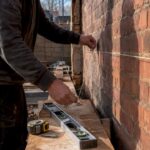
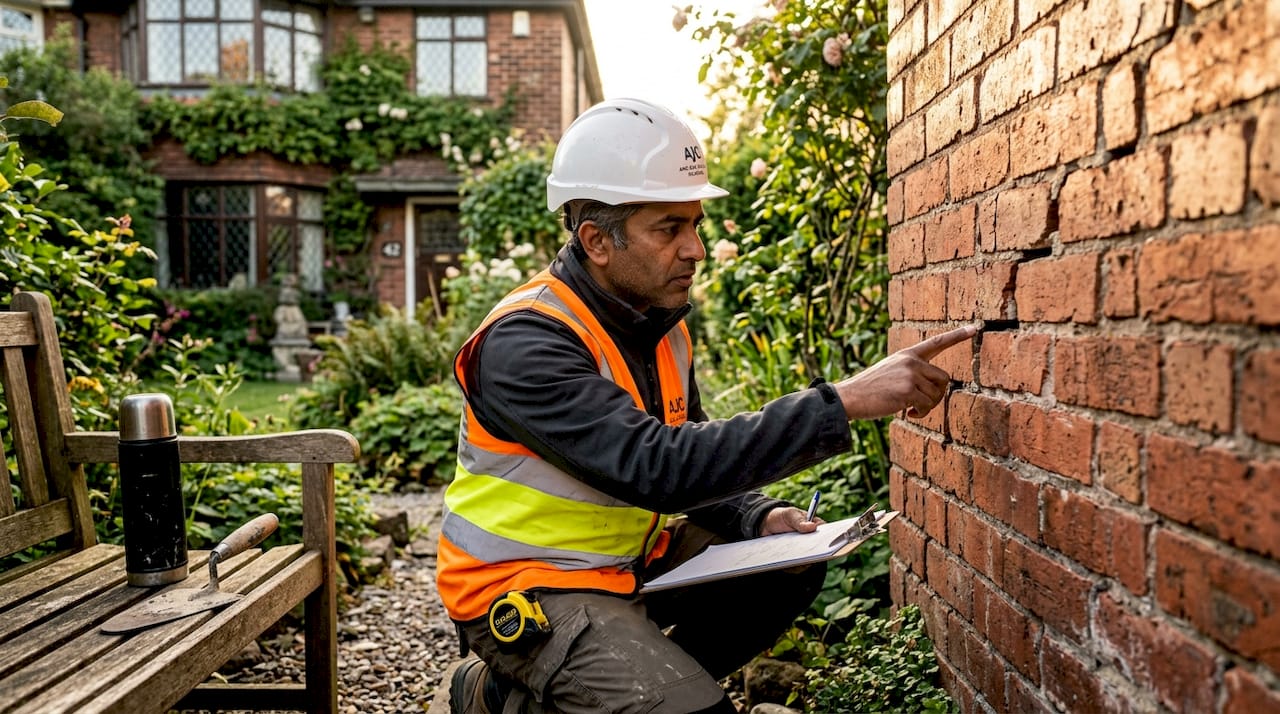
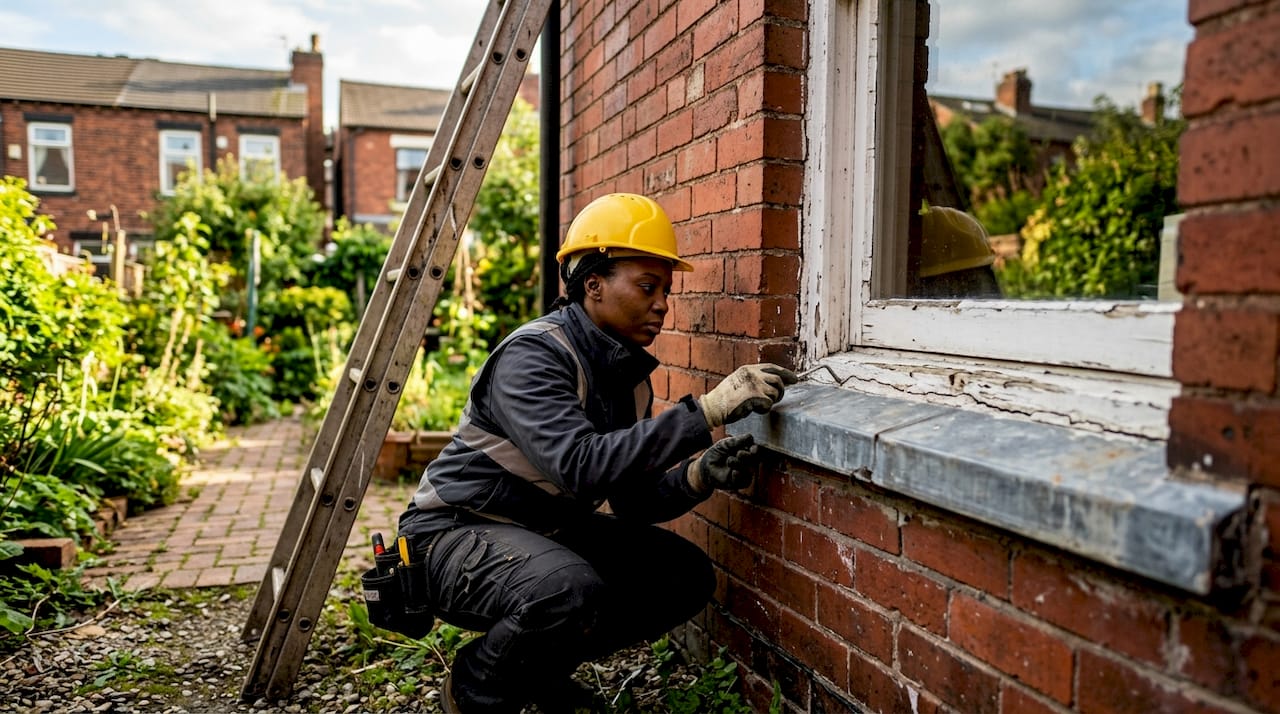
Professional masonry inspections every 3–5 years, combined with annual visual checks, form the foundation of any sound brickwork maintenance strategy. The professional inspection goes beyond what you can see from the pavement. A qualified mason will use close-up, hands-on techniques to probe mortar joints, tap bricks for hollow sounds, and assess areas that a cursory walkround will miss entirely.
The critical signs to look for during any inspection include:
- Mortar erosion exceeding 1/4 inch depth, which allows water to track behind the brick face
- Hairline cracks at corners, lintels, or window reveals, which may signal movement or lintel failure
- Spalling bricks, where the fired outer skin has broken away, exposing the porous core
- Failed or rusted flashing at parapet copings, window heads, and roof abutments
- Blocked or absent weep holes in cavity walls, which cause moisture to build up internally
- Deteriorated expansion joints, which allow differential movement to crack surrounding masonry
Flashing and sealant failures at masonry transition points are among the most frequently overlooked defects. Water enters silently through these points and causes costly internal damage long before any brick deterioration becomes visible. Parapets, lintels, and weep holes deserve particular attention because they are rarely examined during routine walkthroughs.
Cracks may reflect underlying lintel failure or active water infiltration rather than surface brick damage. This distinction matters enormously. Treating the symptom without diagnosing the cause produces temporary repairs that fail after the first winter freeze-thaw cycle.
Pro Tip: Stage your professional masonry inspection to coincide with your annual roof or window survey. A single scaffold mobilisation covers multiple trades, cutting your access costs significantly.
How to prioritise brickwork repairs within your portfolio
Repair prioritisation is the most consequential decision in exterior brick repair management. Without a clear framework, budgets get consumed by visible but non-urgent work while genuinely dangerous defects go unaddressed.
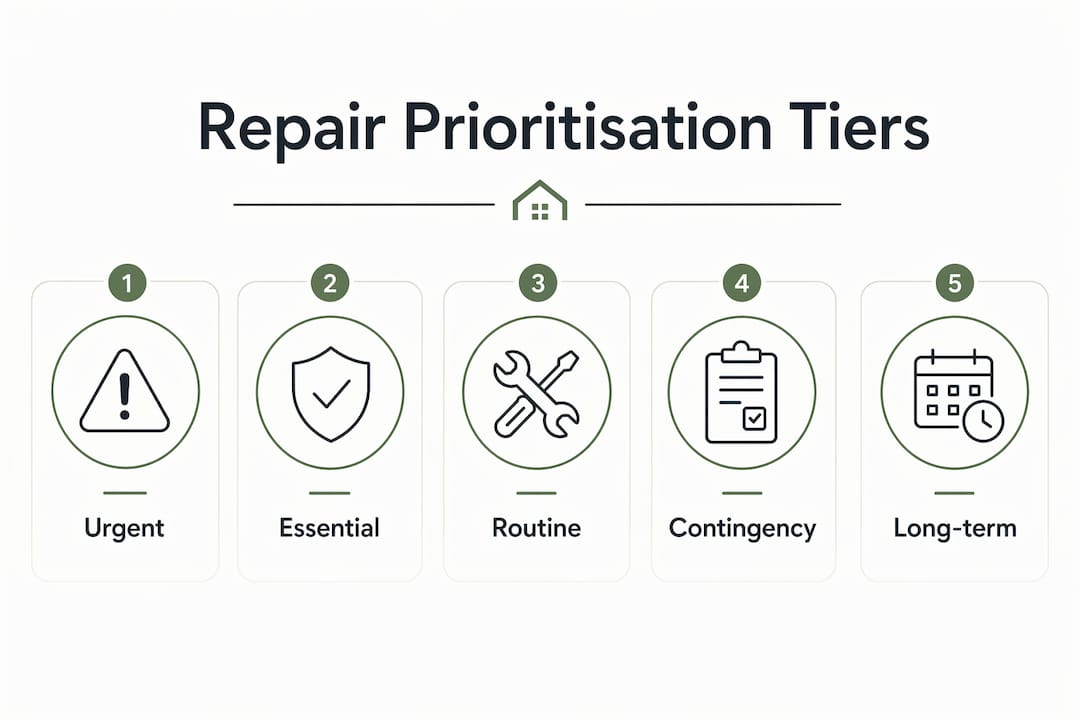
A three-tier categorisation works well for most property portfolios:
- Immediate (within 1–2 years). This tier covers structural safety issues, active water infiltration, failed lintels, and any defect that poses a risk to occupants or the public. These repairs cannot be deferred without increasing liability and cost.
- Near term (3–5 years). This tier includes significant mortar erosion across large elevations, localised spalling, and deteriorated flashing that has not yet caused internal damage. These defects are progressing and will move to the immediate tier if left unaddressed.
- Long term (6–10 years or beyond). This tier covers cosmetic repointing of sound joints, minor staining, and preventive waterproofing treatments on elevations that are performing adequately.
This tiered structure does more than organise work. It gives you a defensible basis for budget approval, whether you are presenting to a board, a landlord, or a lender. A written repair schedule with cost estimates and timescales demonstrates that you are managing the asset rather than reacting to it. Planned capital expenditure on masonry reduces emergency work premiums and prevents premature building envelope failures. Emergency repairs almost always cost more per square metre than planned work, because contractors price risk into reactive callouts.
Set a contingency within each tier, typically 10–15% of the estimated repair value, to cover unforeseen conditions. Hidden damage behind render, failed cavity ties, or corroded lintels discovered during works are common surprises that derail budgets when no contingency exists.
Pro Tip: Bundle near-term brickwork repairs with any planned window replacements or roof works on the same elevation. You share the scaffold cost across multiple trades, which can reduce the overall programme cost materially.
What are the best materials and methods for durable brickwork repairs?
The single most damaging mistake in brick restoration techniques is using the wrong mortar. Rigid, high-strength mortar applied to historic brick causes spalling because the mortar cannot accommodate thermal movement. The mortar must always be softer and more permeable than the brick it surrounds. For pre-1919 buildings, this almost always means a lime-based mix rather than a modern Portland cement mortar.
The principal repair methods used in professional outdoor brickwork upkeep are:
- Repointing. The removal of deteriorated mortar to a minimum depth of 20mm and replacement with a compatible mix. This is the most common repair and, when done correctly, extends masonry life by decades.
- Brick replacement. Individual spalled or fractured bricks are cut out and replaced with matching units. Colour, texture, and bond pattern must be matched carefully to avoid a patchy appearance.
- Crack injection. Structural cracks are stabilised using epoxy or lime-based grout injected under low pressure. This is appropriate only after the root cause of movement has been resolved.
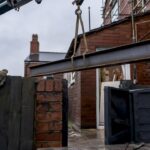
- Lintel replacement. Corroded steel lintels are the most common cause of cracking above openings. Replacement requires temporary propping and careful reinstatement of the brickwork above.
- Flashing repair. Failed lead or aluminium flashing at parapets and abutments is replaced and dressed correctly to shed water away from the wall face.
Sandblasting destroys the brick’s protective fired skin, causing rapid future deterioration. Gentle washing with low-pressure water or appropriate chemical cleaners is the correct approach for cleaning brickwork before repair.
Breathable waterproofing sealers, specifically Silane and Siloxane formulations, provide water repellency while allowing moisture vapour to escape from the wall. Sealers with a permeance rating above 5 perms prevent the trapped moisture that accelerates freeze-thaw damage. Breathable sealers with permeance over 5 perms are the standard recommendation for masonry facade rehabilitation.
Structural repairs such as lintel replacement require formal permitting and documentation, particularly on listed or landmarked buildings. Photographic evidence of pre-repair conditions, mortar analysis results, and material specifications must be retained for compliance purposes.
How to integrate brickwork repairs into capital expenditure planning
Treating masonry as a planned capital line item rather than a reactive maintenance cost is the single most effective shift a property owner can make. Grouping masonry repairs with window and roof projects reduces scaffold mobilisation costs, a saving that is frequently overlooked in capital planning. A scaffold erected for a roof replacement costs the same whether it serves one trade or three.
For owners managing multiple properties, a rolling inspection cycle distributes spending across years rather than concentrating it. Stagger your professional surveys so that two or three properties are assessed each year rather than all at once. This approach smooths cash flow and prevents the situation where a single bad survey year produces an unmanageable repair bill.
The table below compares a coordinated approach against standalone project delivery:
| Approach | Scaffold cost | Programme length | Risk of missed defects |
|---|---|---|---|
| Coordinated multi-trade | Shared across trades | Shorter overall | Lower, single mobilisation |
| Standalone masonry only | Full cost per visit | Longer cumulative | Higher, multiple access events |
Establishing a relationship with a qualified masonry contractor experienced in multi-trade coordination is worth the effort. A contractor who understands roofing sequencing, window installation tolerances, and scaffold planning will save you money on every combined project. Knowing how a property manager selects a builder is therefore as important as knowing the repair methods themselves.
Pro Tip: Ask your masonry contractor to produce a ten-year repair schedule at the end of each inspection. This document becomes your capital planning tool and your evidence of due diligence if the property is ever sold or refinanced.
Key takeaways
Proactive masonry asset management costs significantly less than reactive repair, and the gap widens with every year of deferred maintenance.
| Point | Details |
|---|---|
| Inspect on a fixed cycle | Commission professional masonry surveys every 3–5 years and carry out visual checks annually. |
| Use a three-tier repair plan | Categorise defects as immediate, near term, or long term to control budgets and manage risk. |
| Match mortar to the brick | Always use a softer, lime-based mortar on older brickwork to prevent spalling and cracking. |
| Bundle works to cut costs | Combine brickwork repairs with roofing or window projects to share scaffold mobilisation costs. |
| Document everything | Retain photographic records and material specifications, especially for regulated or historic buildings. |
What I have learned from years of managing brickwork repair portfolios
The most consistent mistake I see property owners make is treating the visible crack as the problem. It rarely is. The crack is the symptom. The problem is usually a corroded lintel, a failed flashing, or a blocked weep hole that has been directing water into the wall for years. By the time the crack appears, the internal damage is already done. Early, thorough condition assessments prevent the expensive surprises that derail budgets and relationships with tenants or leaseholders.
Reactive budgeting is the other pattern that causes real pain. When masonry repairs are funded from a general maintenance pot rather than a dedicated capital line, the money is never there when the survey results arrive. Owners end up deferring tier-one repairs into tier-two territory, and tier-two repairs disappear entirely. The building deteriorates faster than the budget recovers.
The contractors who deliver the best outcomes on complex portfolios are not always the cheapest. They are the ones who understand building science, who know the difference between a lime mortar and a cement mortar, and who can read a crack pattern and tell you what caused it. Selecting a contractor with genuine expertise in historic materials and multi-trade coordination is the decision that determines whether your repair portfolio holds its value or quietly erodes it. I have seen well-intentioned owners spend twice the money by appointing the wrong contractor first and the right one second.
— Will
How Ajcandsonbuilders supports your brickwork repair planning
Ajcandsonbuilders brings together brickwork expertise and capital planning experience to help property owners across Liverpool and Merseyside manage their masonry assets with confidence. We carry out thorough condition assessments, produce repair schedules, and coordinate brickwork works alongside roofing, rendering, and window projects to reduce your overall programme costs.

Whether you are managing a single residential property or a portfolio of commercial buildings, we tailor our approach to your timescales and budget. Our team understands the difference between lime and cement mortars, the requirements for regulated buildings, and the value of getting the diagnosis right before any work begins. Explore our house renovation services or view our completed brickwork projects to see the standard of work we deliver. Contact us for a free consultation and let us help you build a repair plan that protects your asset for the long term.
FAQ
How often should exterior brickwork be professionally inspected?
Professional masonry inspections every 3–5 years, combined with annual visual checks, are the standard recommendation. This frequency catches mortar erosion, cracking, and flashing failures before they escalate into structural problems.
What is the most common cause of brickwork cracking?
Cracks above windows and door openings most commonly result from corroded or undersized steel lintels rather than brick failure. A qualified mason must diagnose the root cause before any repair work begins.
Can I use standard cement mortar to repoint old brickwork?
No. High-strength Portland cement mortar is too rigid for pre-1919 brickwork and causes the brick face to spall. A lime-based mortar matched to the hardness and permeability of the original brick is the correct choice.
What repairs require planning permission or formal documentation?
Minor repointing typically does not require a permit, but structural repairs such as lintel replacement do. Listed or landmarked buildings require additional documentation, including photographic evidence and material specifications, before and after works.
How do I reduce the cost of managing masonry repairs across multiple properties?
Bundle masonry repairs with roofing or window replacement projects on the same elevation to share scaffold costs. A rolling inspection cycle that staggers surveys across properties each year also distributes capital expenditure and prevents budget spikes.