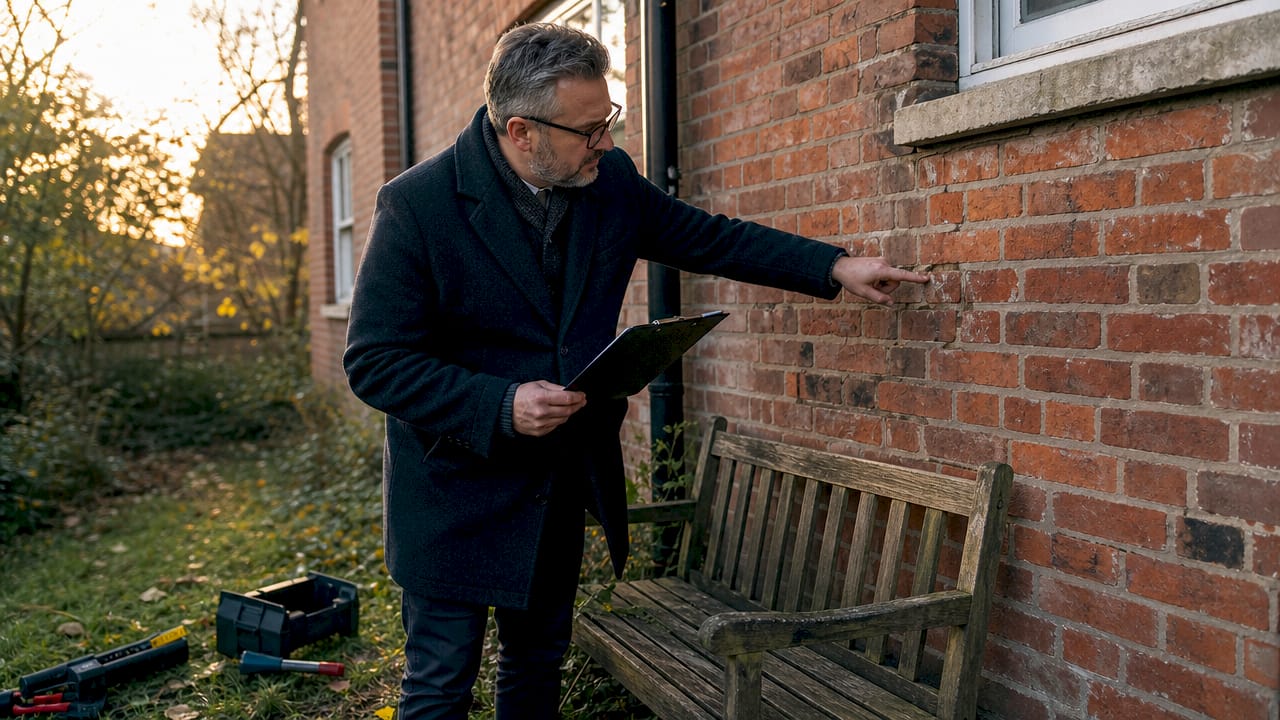
Masonry deterioration is the leading cause of structural complaints in rental buildings across England, and landlords have a legal duty to act. Under Section 11 of the Landlord and Tenant Act 1985, all tenancies under seven years require landlords to maintain the structure and exterior, including walls, gutters, and external pipes. Common brickwork issues in rental buildings typically stem from four sources: mortar failure, water ingress, structural movement, and deferred maintenance. Identifying these problems early protects your tenants, your property value, and your legal standing.
1. What are the early warning signs of brickwork deterioration?
Mortar joint erosion is the first visible sign that your brickwork needs attention. Mortar eroded beyond 1/4 inch from the brick face creates an open channel for water to enter the wall cavity. Once water gets in, freeze-thaw cycles during winter months accelerate the damage significantly.
Landlords and property managers should watch for these specific indicators:
- Recessed or crumbling mortar joints exceeding 1/4 inch depth, visible as shadowed lines between bricks
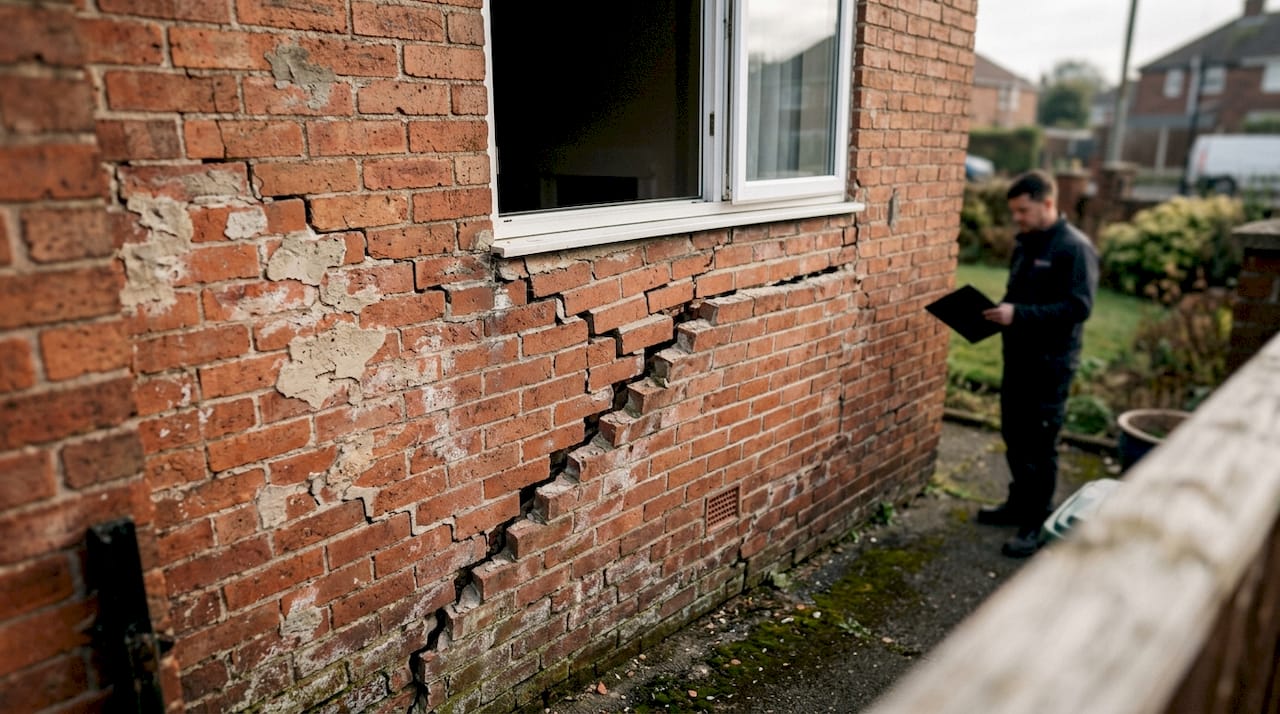
- Hairline and stair-step cracks, particularly near window and door openings where stress concentrates
- Efflorescence, the white powdery salt deposits that appear on brick faces when moisture migrates through the wall
- Loose, bulging, or displaced bricks, which signal that the wall has lost structural cohesion
- Vegetation growth in joints, indicating persistent moisture and advanced mortar breakdown
- Rust staining running vertically down a wall, often pointing to corroding metal ties or lintels behind the face
Each of these signs represents a different stage of masonry distress. Stair-step cracking near openings, for example, often points to a structural cause rather than surface weathering alone.
Pro Tip: Carry out a visual inspection of your rental building’s brickwork after any prolonged period of frost. Freeze-thaw damage accelerates rapidly and is far easier to spot once temperatures rise.
2. How does water ingress from gutters and downpipes damage brickwork?
Faulty external plumbing is one of the most preventable causes of brickwork problems in rentals. Misaligned downpipes and dripping gutters direct water continuously onto brick faces, eroding mortar joints and saturating the wall behind. Landlords frequently underestimate how quickly this damage compounds.
The mechanism is straightforward. Water that runs down a wall repeatedly softens the mortar. In winter, that absorbed moisture freezes, expands, and forces the mortar apart. Over several seasons, this process hollows out joints and can dislodge bricks entirely.
Watch for these external plumbing faults during inspections:
- Gutters pulling away from the fascia or sitting at the wrong angle
- Visible drip marks or green algae staining directly below gutter joints
- Downpipes discharging water against the wall rather than into a drain
- Blocked hoppers causing overflow onto the brickwork below
- Mortar erosion concentrated directly beneath a gutter run
Tenant complaints about internal damp on external walls are frequently traced back to a leaking gutter rather than a crack in the brickwork itself. Addressing the gutter and downpipe condition first often resolves the damp complaint without any masonry work at all.
Pro Tip: Inspect gutters and downpipes in autumn before the first frost and again in spring. Clearing debris twice a year costs very little compared to repointing an entire elevation.
3. Which structural movements cause brickwork cracking in rental properties?
Not all cracks are equal, and distinguishing surface weathering from structural movement is one of the most important skills a property manager can develop. Differential settlement, lintel corrosion, and thermal movement each produce characteristic crack patterns that point to different remedies.
Differential settlement occurs when one part of a building’s foundation moves at a different rate to another. This produces diagonal or stair-step cracks that run through mortar joints rather than through the bricks themselves. Settlement cracks that are stable and less than 2mm wide are generally cosmetic. Cracks that are widening, or that run through the bricks rather than the joints, require a structural engineer’s assessment.
Brickwork cracks near windows and doors often signal corroding steel lintels rather than foundation movement. Steel lintels expand as they rust, pushing the masonry above the opening apart. Left untreated, this leads to displaced bricks and potential collapse of the section above the window. Early detection allows targeted tuckpointing and lintel replacement rather than a full rebuild.
Thermal expansion also causes cracking, particularly in long, uninterrupted runs of brickwork without movement joints. This is common in Victorian terraces and converted commercial buildings where the original construction predates modern movement joint standards.
4. Why does mortar choice matter so much for rental building repairs?
Using the wrong mortar is one of the most damaging mistakes a landlord can make when repairing brickwork. Mortar is designed as a sacrificial material, intentionally softer than the brick it surrounds. When mortar fails, it can be raked out and replaced without harming the brick. That is the system working correctly.
The problem arises when hard Portland cement mortar is used to repoint older lime-based brickwork. Portland cement is far stronger and less permeable than lime mortar. It traps moisture inside the wall rather than allowing it to evaporate, and the resulting pressure causes the brick faces to spall and crack. This type of damage is irreversible without replacing the affected bricks entirely.
The table below summarises the key differences between mortar types and their appropriate applications:
| Mortar type | Composition | Best used for | Risk if misapplied |
|---|---|---|---|
| Lime mortar | Lime putty or hydraulic lime | Pre-1920s brick, historic buildings | None when used correctly |
| Portland cement mortar | Ordinary Portland cement | Modern dense brickwork | Spalling and moisture trapping on older brick |
| Lime and cement blend | Mixed ratio | Post-war brick, semi-modern builds | Moderate risk on very soft historic brick |
Repointing with a compatible, breathable mortar preserves the brick and allows the wall to manage moisture naturally. Ajcandsonbuilders always assesses the original mortar composition before recommending a repair mix, because getting this wrong costs far more to fix than getting it right the first time.
5. How can regular inspections prevent costly masonry repairs?
Bi-annual inspections every six months are the industry standard for masonry maintenance in rental buildings. Catching a failed mortar joint early costs a fraction of what a full repointing programme or structural repair demands. The inspection itself need not be complex, but it must be systematic.
A practical six-monthly inspection checklist for landlords and property managers:
- Walk the full perimeter of the building and photograph any visible cracks, staining, or displaced bricks
- Check all mortar joints at ground level and at any accessible height for recession or crumbling
- Inspect parapet walls and chimney stacks, as these are exposed on all sides and deteriorate faster
- Clear and check all gutters, downpipes, and hoppers for blockages or misalignment
- Look for efflorescence on internal walls adjacent to external brickwork, which signals active moisture ingress
- Check around window and door lintels for cracking or rust staining
- Document all findings with dated photographs and written notes
Documented maintenance records also position you defensibly against liability claims. If a tenant reports damp and you have a record of inspections and prompt repairs, your legal exposure is significantly reduced. Ajcandsonbuilders recommends sharing a brief written summary with tenants after each inspection, which also encourages them to report new issues promptly.
6. What are the most common repair mistakes landlords make with brickwork?
Landlords managing rental property brick issues often make the same errors, and most of them come from prioritising short-term cost over long-term building health. The most frequent mistake is applying a surface sealant over deteriorating mortar rather than repointing properly. Sealants trap moisture behind the face and accelerate the very damage they appear to fix.
A second common error is using a single contractor for all trades without verifying masonry-specific experience. Brickwork repair requires knowledge of mortar compatibility, crack diagnosis, and lintel assessment. A general builder who lacks this knowledge may repoint with the wrong mix or miss a structural crack that needs engineering input.
Patch repairs carried out without matching the original brick colour and texture also create problems. Beyond aesthetics, mismatched patches can indicate that the repair did not address the underlying cause. If the same area fails again within two years, the root cause was not resolved.
Finally, many landlords delay repairs because the damage looks minor. Facade damage in rental buildings often indicates deeper structural failure. What appears as a hairline crack on the surface can conceal a corroding lintel or a saturated wall cavity behind it.
Key takeaways
Proactive masonry maintenance is the single most effective way to protect a rental building from structural failure and legal liability.
| Point | Details |
|---|---|
| Mortar erosion threshold | Joints recessed beyond 1/4 inch require professional repointing to stop water infiltration. |
| Mortar compatibility | Always match mortar type to the original; Portland cement damages older lime-based brickwork. |
| Water ingress source | Faulty gutters and downpipes cause the majority of preventable brick erosion in rental buildings. |
| Lintel cracking | Cracks near windows and doors often signal corroding steel lintels, not surface weathering. |
| Inspection frequency | Six-monthly inspections with documented records reduce repair costs and legal exposure. |
What I have learned from managing brickwork on rental buildings
The most expensive brickwork repairs I have seen were not caused by age or weather. They were caused by delay. A landlord spots a crack above a window, decides it looks stable, and leaves it for another year. By the time a builder is called, the lintel has corroded enough to displace three courses of brick and the repair bill has multiplied several times over.
Multi-unit buildings present a particular challenge. Co-ownership structures and board approvals create delays that simply do not exist with a single-owner property. By the time a decision is made and funds are approved, a shared chimney stack has allowed water into two flats rather than one. The cost of that delay is always higher than the cost of acting early.
My practical advice is to treat brickwork inspections the same way you treat boiler servicing. Schedule them, document them, and act on findings within a defined timeframe. Tenants who see prompt, professional repairs stay longer and report problems earlier. That combination keeps your building in better condition at lower overall cost.
Partnering with builders who understand masonry specifically, rather than general contractors who treat it as one trade among many, makes a measurable difference to outcomes. The right builder will tell you when a crack is cosmetic and when it needs an engineer. That honesty saves money and protects you legally.
— Will
Brickwork repairs for rental buildings: how Ajcandsonbuilders can help
Ajcandsonbuilders specialises in brickwork repair and maintenance for residential and commercial rental buildings across Liverpool and Merseyside. We carry out mortar compatibility assessments, repointing, lintel inspections, and full masonry restoration, all with a clear understanding of landlord repair obligations under English law.

Whether you manage a single rental property or a multi-unit block, we provide thorough inspections and written reports that support your maintenance records. Our team also handles the renovation and structural works that often accompany brickwork repairs, so you deal with one reliable contractor rather than several. Contact Ajcandsonbuilders for a free quote and straightforward advice on your building’s masonry condition.
FAQ
What causes mortar joints to fail in rental buildings?
Mortar joints fail primarily through water ingress, freeze-thaw cycles, and age-related erosion. Joints recessed beyond 1/4 inch from the brick face are a critical threshold requiring professional repointing.
Are landlords legally required to repair brickwork?
Yes. Under Section 11 of the Landlord and Tenant Act 1985, landlords must maintain the structure and exterior of rental properties, including walls and external pipes, for tenancies under seven years.
How often should rental building brickwork be inspected?
Bi-annual inspections every six months are the industry standard. Inspections should cover mortar joints, parapet walls, chimney stacks, gutters, and downpipes, with findings documented and dated.
Can I use standard cement to repoint old brickwork?
No. Hard Portland cement mortar traps moisture in older lime-based brickwork, causing the brick faces to spall. Always use a mortar mix compatible with the original material.
What does a stair-step crack in brickwork indicate?
Stair-step cracks running through mortar joints typically indicate differential settlement. Cracks that are widening or running through the bricks themselves require a structural engineer’s assessment before any repair work begins.