
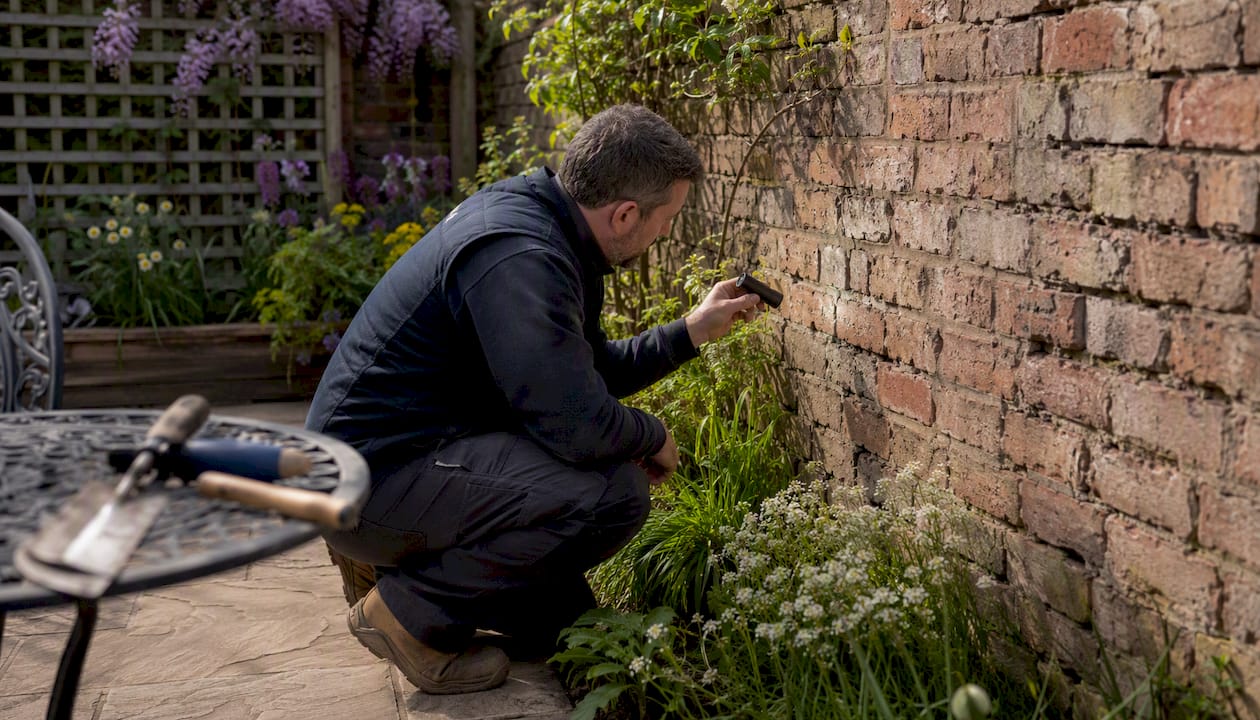
Repointing keeps masonry weathertight and prevents expensive brick decay. The mortar in your joints is deliberately softer than the bricks surrounding it, acting as a sacrificial layer that absorbs moisture and movement so the bricks themselves do not fail. When that mortar deteriorates, water finds its way in, and the consequences escalate quickly.
Three core reasons explain why pointing work matters for every UK homeowner:
- Weatherproofing: Intact joints seal the wall against rain, wind-driven moisture, and frost.
- Moisture management: Lime-based mortars allow walls to breathe, releasing moisture rather than trapping it behind an impermeable skin.
- Preserving brick fabric: Healthy mortar takes the wear so bricks remain undamaged and structurally sound for decades longer.
Verdict for UK homeowners: Inspect your masonry regularly, photograph any deterioration you find, and arrange a professional assessment if you spot any of the warning signs listed below. The Society for the Protection of Ancient Buildings (SPAB) provides authoritative guidance on mortar selection, and Local Authority Building Control (LABC) is the right first call when you suspect structural movement. For homeowners in Liverpool and Merseyside, Ajcandsonbuilders offers on-site assessments and professional repointing as part of its brickwork services.
Pro Tip: Inspect your masonry each spring, after frost-thaw cycles have done their worst. Photograph the base of walls, areas around window and door openings, and any sections that face prevailing weather. Those photos become invaluable when gathering quotes.
Table of Contents
- What is repointing, and what types of finish should you know about?
- What are the signs your house needs repointing?
- What happens if you delay repointing?
- What does a repointing job actually involve?
- Why does mortar choice matter so much for UK houses?
- How often does pointing need attention, and when should you plan work?
- What affects the cost of repointing, and how do you get accurate quotes?
- How do you choose the right contractor for repointing?
- What does SPAB guidance say, and why do some mistakes cause permanent damage?
- Key takeaways
- A builder’s perspective on why early repointing saves money
- Repointing in Liverpool and Merseyside: get a professional assessment
- Useful UK sources for repointing guidance
What is repointing, and what types of finish should you know about?
Repointing is the process of cutting out decayed or failing mortar from the joints between bricks or stone and replacing it with fresh mortar to restore weathertightness. It is not a cosmetic exercise. The joint is the wall’s primary defence against moisture ingress, and once mortar begins to fail, that defence weakens with every rainfall.
Common pointing finishes you may encounter include:
- Flush pointing: Mortar finished level with the brick face; durable and common on modern properties.
- Recessed pointing: Mortar set slightly back from the face; suits some architectural styles but can collect water if overdone.
- Weather-struck pointing: Angled to shed rainwater; traditionally used on exposed elevations.
- Tuck pointing: A specialist decorative finish using two contrasting mortars; found on Georgian and Victorian properties.
The finish affects both performance and appearance, so matching the original profile matters. Repointing is typically localised rather than a wholesale strip of an entire wall. A good tradesperson will identify which sections have failed and address those specifically, rather than raking out sound mortar unnecessarily.
Pro Tip: Before any work begins, photograph the existing joint profile from close range. A clear image helps your contractor match the finish and gives you a reference point if there is any dispute about the result.
What are the signs your house needs repointing?
Identifying the signs early keeps repair costs manageable. The following checklist covers what to look for during a self-inspection:
- Mortar that crumbles or falls away when touched lightly
- Joints where mortar is visibly recessed more than the joint width, or missing entirely
- Vegetation, moss, or weeds rooted in the joints
- White efflorescence (salt deposits) on the brick face
- Damp patches or mould appearing on internal walls after heavy rain
- Gaps or movement around window and door frames
- Spalling bricks where the face has flaked or blown off
Some of these signs demand faster action than others. Internal damp that appears after rainfall, wide stair-step cracks running diagonally across the brickwork, or any loose masonry are indicators of urgent deterioration. These warrant a professional inspection without delay.
Pro Tip: Run a screwdriver lightly along a joint. If mortar powders or falls away with minimal pressure, it has lost its binding strength. Avoid aggressive probing, though, as this can dislodge sound mortar adjacent to the failing section. Spring is the best time to carry out this check, because frost-thaw cycles through winter reveal deterioration that is not always visible in summer.
Inspect the base of walls, around all openings, and on the most exposed elevations first. These areas take the heaviest weather loading and fail earliest.
What happens if you delay repointing?
Neglected joints do not simply stay as they are. Frost damage, salt crystallisation, and prolonged moisture exposure drive a progressive deterioration that becomes significantly more expensive to address the longer it is left.
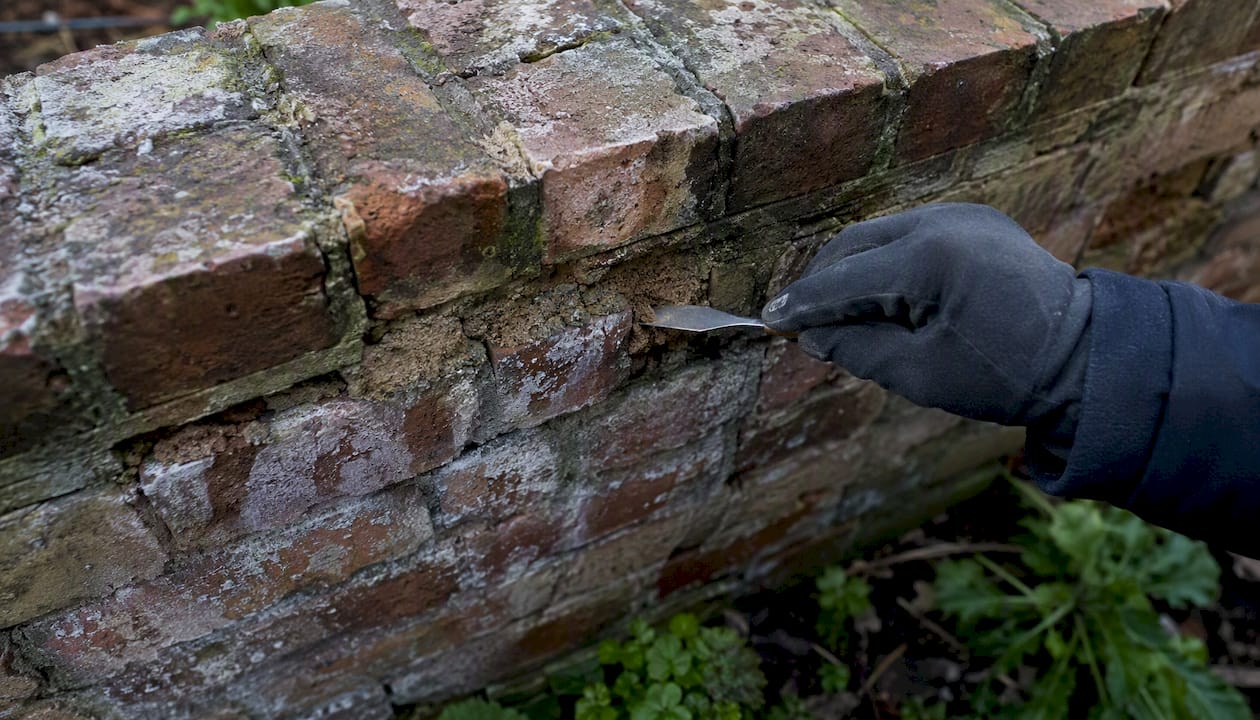
The typical escalation pathway runs like this: open joints allow water to penetrate the wall; in winter, that water freezes and expands, forcing bricks apart; the brick face spalls and weakens; eventually, bricks require replacement rather than simple repointing. Brick replacement costs considerably more than mortar repair, and matching original brick types on older properties can be difficult and expensive.
Beyond cost, the structural risks are real. Prolonged moisture ingress causes:
- Timber decay at window and door reveals, leading to frame failure
- Internal damp and mould, with associated health implications
- Salt crystallisation that accelerates brick spalling from within
- In severe or prolonged cases, structural movement affecting the wall’s integrity
Delayed repointing that forces brick replacement is one of the most avoidable and costly outcomes we see on older properties. A small repair job becomes a major one simply through inaction.
If you notice large cracks, stair-step cracking, or any movement that appears to affect a party wall or boundary structure, contact Local Authority Building Control (LABC) or a structural engineer before proceeding with any repair work. For landlords managing multiple properties, understanding common brickwork issues is particularly relevant to managing repair costs proactively.
What does a repointing job actually involve?
Knowing what a competent tradesperson should do helps you assess the quality of any quote and spot poor workmanship before it causes problems.
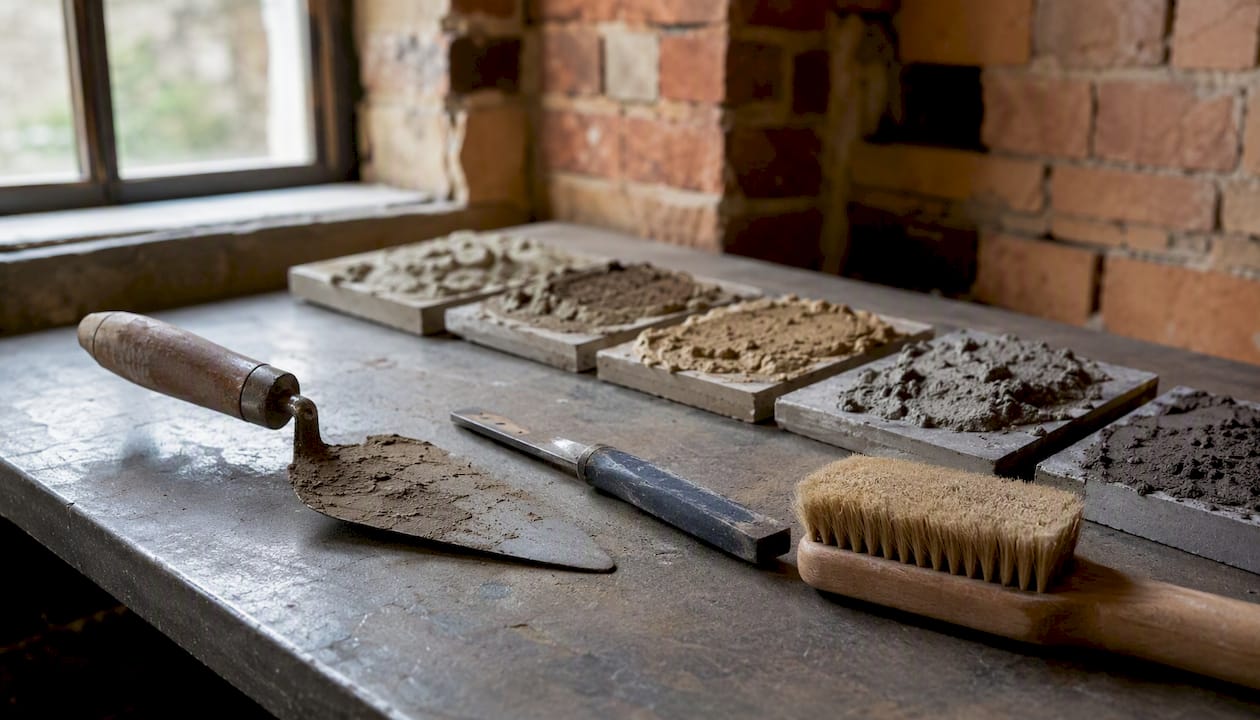
- Inspection and sampling: The contractor assesses the extent of joint failure, tests mortar hardness, and identifies the mortar type needed to match the existing fabric.
- Raking out: Old mortar is removed to a depth of 15–25mm, or twice the joint width, using hand tools on traditional brickwork. This preserves the brick arrises (the sharp edges of each brick).
- Mortar preparation: A mix is prepared to match the original in strength, composition, and colour.
- Packing in layers: Mortar is applied in layers rather than one thick application, which reduces shrinkage and improves adhesion.
- Tooling to profile: Once the mortar has reached the right consistency, it is finished to match the original joint profile.
- Curing and cleaning: The new mortar is protected from rapid drying, frost, and rain during the curing period, and the wall face is cleaned of any smears.
Pro Tip: On older or softer brickwork, insist on hand raking. Angle grinders are faster but cause permanent damage to brick arrises, widening joints irreversibly and altering the wall’s appearance and performance. This damage cannot be undone.
Scaffolding is often required for upper-storey work and will affect the overall cost. Repointing is usually localised rather than a full-wall operation, though a contractor should explain clearly which sections need attention and why. In conservation areas, a sample panel may need approval before full-scale work begins.
Why does mortar choice matter so much for UK houses?
This is where many well-intentioned repairs go wrong, sometimes irreversibly. The choice between lime-based and cementitious mortars is not a matter of preference; it is determined by the building’s age, brick type, and original construction method.
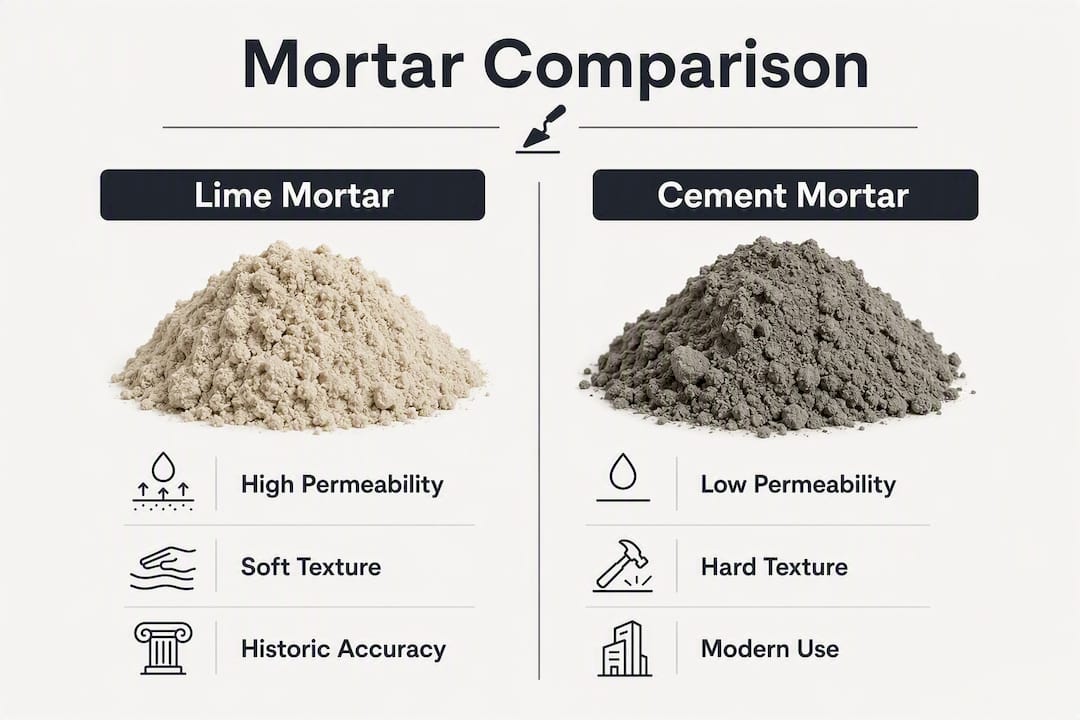
| Feature | Lime mortar | Modern cement mortar |
|---|---|---|
| Permeability | High; allows moisture to escape | Low; can trap moisture in the wall |
| Hardness | Softer than most bricks | Often harder than older bricks |
| Sacrificial behaviour | Fails before the brick, protecting it | Can cause brick to fail first |
| Flexibility | Accommodates movement | Rigid; can crack under movement |
| Reversibility | Relatively easy to remove | Difficult to remove without damage |
| Best suited to | Pre-1919 and older porous brickwork | Modern hard-fired brickwork |
SPAB guidance is clear: mortar must generally be softer and more permeable than the masonry it sits between. Using hard cement mortars on older, porous brickwork reverses the sacrificial role the mortar is supposed to play. Instead of the mortar failing first, the brick fails, and brick spalling on a Victorian terrace or an Edwardian semi can be irreversible without costly replacement.
South Gloucestershire’s technical guidance on pointing historic buildings reinforces this, noting that traditional lime mortars allow buildings to breathe, while modern cement can trap moisture and accelerate decay. For properties built before 1919, hydraulic or non-hydraulic lime is almost always the appropriate choice. For post-1945 hard-fired brick construction, a cementitious mix may be suitable, but the specification should still be confirmed by a competent tradesperson.
Practical cues for mortar selection:
- Building constructed before 1919 or 1930s: strongly favour lime
- Soft, handmade, or stock bricks: lime is non-negotiable
- Conservation area or listed building: lime, and seek conservation officer advice
- Hard, machine-made engineering brick: cementitious mix may be appropriate
Matching colour and texture matters too. A mortar that is technically correct but visually jarring devalues the property and can attract conservation area enforcement. For guidance on how brick type influences pointing choices, the brickwork styles guide covers this in practical detail.
Caution: Where existing cement pointing is very hard and well-bonded, forcing it out can cause more damage than leaving it to fail naturally. South Gloucestershire’s guidance recommends a trial raking exercise to assess the risk before committing to full removal.
How often does pointing need attention, and when should you plan work?
There is no single fixed interval, because mortar life depends heavily on exposure, mortar type, and the quality of the original application. Older sources commonly reference a practical life of around 20–30 years for many mortars, though well-specified lime mortars on sheltered elevations can last considerably longer.
A sensible inspection timetable for most UK homeowners:
- Every 5–10 years: Visual check of all elevations, paying particular attention to exposed faces and areas around openings.
- Every 10–15 years: More detailed inspection, including the screwdriver test on suspect areas.
- Immediately: Professional survey if any of the warning signs listed earlier are present.
Pro Tip: Plan repointing work for spring or early summer. This gives you the benefit of post-winter visibility of any frost damage, and the warmer, drier conditions support proper mortar curing. Avoid scheduling work during frost or prolonged dry, hot spells, both of which interfere with curing and reduce the mortar’s long-term performance.
If your property is in a conservation area or is listed, factor in additional lead time. A sample panel may need to be approved by the local authority before full-scale work can begin, and this process can take several weeks.
What affects the cost of repointing, and how do you get accurate quotes?
Repointing costs vary considerably, and understanding the drivers helps you compare quotes on a like-for-like basis rather than simply choosing the lowest figure.
Key cost drivers:
- Total area and linear metres of joint to be repointed
- Depth of raking required and condition of existing mortar
- Mortar type (lime mixes typically cost more than standard cement)
- Access and scaffolding requirements
- Whether any brick replacement or structural repair is needed
- Sample panel testing and conservation area compliance
- Finishing profile and any specialist tuck-pointing
Getting accurate, comparable quotes requires a clear written brief. When requesting quotes, ask each contractor to provide:
- A written scope of works identifying which sections are to be repointed
- The mortar specification, including mix proportions and any admixtures
- Whether a sample panel is included and how approval will be managed
- Curing and protection measures during and after application
- A warranty or guarantee period for the completed work
- Provisional sums for any brick repairs discovered during raking out
Extremely low quotes often omit necessary steps such as correct mortar specification, sample panels, or scaffolding. A quote that does not address access for upper-storey work should be treated with caution. Staged pricing, where the contractor provides a base quote and clearly identified provisional sums, gives you a more honest picture of the likely final cost.
For homeowners weighing repointing against broader renovation work, understanding how a property manager selects a builder offers useful procurement guidance that applies equally to homeowners commissioning larger projects.
How do you choose the right contractor for repointing?
The quality of repointing work depends almost entirely on the tradesperson’s knowledge and care. Price is a poor guide to competence here. A cheap job with the wrong mortar or aggressive raking can cause damage that costs far more to rectify than the original repair.
Questions to ask any contractor before committing:
- Do you have experience with lime mortars, and can you specify the appropriate mix for this building?
- Can you provide references and recent photographs of comparable repointing jobs?
- Will you hand-rake the joints, and what tools do you use?
- Will you prepare a sample panel before full-scale work begins?
- Are you fully insured, including public liability cover?
- How do you dispose of raked-out mortar waste?
Red flags that should give you pause:
- Proposing to use an angle grinder for raking on older or softer brickwork
- Refusing to prepare a sample panel or match the existing joint profile
- Unable to specify the mortar mix they intend to use
- No public liability insurance documentation available
- An estimate significantly below all others, with no explanation of what has been excluded
Pro Tip: Ask to see photographs of a recently completed job on a property of similar age and brick type to yours. A contractor who works regularly with lime mortars and older brickwork will have these readily available. If they cannot produce them, that tells you something important.
For professional repointing in Liverpool and Merseyside, working with qualified tradespeople who understand both lime and cementitious specifications makes a measurable difference to the longevity of the repair.
What does SPAB guidance say, and why do some mistakes cause permanent damage?
The Society for the Protection of Ancient Buildings (SPAB) is the leading UK authority on the maintenance of historic masonry, and its guidance on repointing is unambiguous on several points that are frequently misunderstood.
Repointing is sacrificial maintenance. The mortar joint is designed to fail before the brick or stone, absorbing moisture and movement so the masonry fabric is preserved. Using hard cement mortars on older buildings reverses this relationship entirely, causing the brick to fail first — often irreversibly.
Key principles from SPAB and supporting technical sources:
- Mortar must be softer and more permeable than the masonry it binds
- Repointing should be targeted at areas of genuine failure, not applied wholesale to sound joints
- Hand raking to the correct depth protects arrises; angle grinders cause permanent arris loss on soft bricks
- Where hard cement pointing already exists, trial raking should determine whether removal is feasible before committing to full works
The irreversibility of certain mistakes is worth emphasising. Arris damage from mechanical grinding cannot be undone. Brick spalling caused by trapped moisture behind hard cement pointing often requires brick replacement rather than repointing. These are not theoretical risks; they are outcomes we see on properties where well-meaning but poorly specified work has been carried out.
For historic or listed buildings, a specialist assessment is advisable before any repointing begins. Where structural risk is present, consulting Local Authority Building Control ensures that any works are carried out within the appropriate regulatory framework. Conservation officers at your local authority can advise on mortar specifications and whether consent is required.
Key takeaways
Repointing protects masonry by acting sacrificially, and choosing the wrong mortar or delaying repairs causes damage that is far more expensive to reverse than the original maintenance would have been.
| Point | Details |
|---|---|
| Inspect after winter | Spring checks reveal frost-thaw damage; use the screwdriver test on suspect joints. |
| Match mortar to the building | Pre-1919 properties need lime; hard cement on older brickwork causes irreversible brick spalling. |
| Act on warning signs promptly | Internal damp after rain, stair-step cracks, and loose masonry all require professional assessment without delay. |
| Get a written specification | Every quote should include mortar mix, sample panel, curing measures, and provisional sums for brick repairs. |
| Ajcandsonbuilders for Liverpool homeowners | Ajcandsonbuilders provides on-site assessment, mortar matching, and insured repointing across Liverpool and Merseyside. |
A builder’s perspective on why early repointing saves money
We see the same pattern repeatedly on older Liverpool terraces and Merseyside semis: a homeowner notices a damp patch inside, investigates, and discovers that the mortar has been failing for years. By that point, the repair is no longer a straightforward repointing job. Bricks have spalled, timber lintels have taken moisture, and what should have been a modest maintenance task has become a significant repair programme.
Our approach on every job starts with a proper inspection and a mortar sample. On properties built before the 1930s, we default to lime unless there is a specific reason to do otherwise, because we have seen what happens when the wrong mortar is used. We hand-rake every joint, prepare a sample panel where the client or conservation area requires it, and document the work with photographs at each stage. That documentation protects the homeowner as much as it protects us.
The cost saving from early intervention is not marginal. A localised repointing job on a section of failing wall is a fraction of the cost of replacing spalled bricks and repointing the same area afterwards. The homeowners who call us early spend less, and their properties are in better condition for longer.
Repointing in Liverpool and Merseyside: get a professional assessment
Ajcandsonbuilders offers homeowners across Liverpool and Merseyside a straightforward route from inspection to completed repointing work, without the uncertainty of unspecified quotes or mismatched mortars.

Our repointing service includes an on-site assessment, mortar matching for the building’s age and brick type, hand raking on older properties, sample panel preparation where required, and fully insured workmanship throughout. We work on everything from Victorian terraces to post-war semis, and we carry out house renovation projects where repointing forms part of a broader programme of masonry repair.
If you have noticed any of the warning signs covered in this guide, or simply want a professional eye on your masonry before problems develop, request a free quote from Ajcandsonbuilders today. We cover Liverpool, Merseyside, and the surrounding area, and we are happy to advise on whether repointing alone is sufficient or whether additional masonry work is needed.
Useful UK sources for repointing guidance
These authoritative sources provide technical detail, conservation guidance, and regulatory information for UK homeowners:
- Society for the Protection of Ancient Buildings (SPAB) — Repointing: The primary UK conservation authority on mortar selection, sacrificial maintenance, and common mistakes.
- South Gloucestershire Council — Pointing of Historic Buildings 2024: Detailed local authority technical guidance on lime mortars, breathability, and finish profiles.
- HGSTrust — Technical Guidance on Pointing of Brickwork: Practical specifications for raking depth, hand tools, and sample panels.
- Local Authority Building Control (LABC): Contact your local LABC office for structural concerns, listed building queries, and building regulation advice.
- Historic England — Listed Buildings: Check whether your property is listed and understand what consent may be required before repointing begins.
- Ajcandsonbuilders — Brickwork Services, Liverpool and Merseyside: Professional repointing and brickwork repair for homeowners across the region.
If your property appears on the National Heritage List for England, consult your local authority’s conservation officer before commissioning any repointing work. They can advise on appropriate mortar specifications and whether listed building consent is required.